


Sales & Production Control
Sales & Production Management Team
This team plays an important role as a bridge to realize the client's requests as much as possible.
While communicating with the planning team and the manufacturing site, you will be in charge of overall direction, including managing delivery dates and quality.
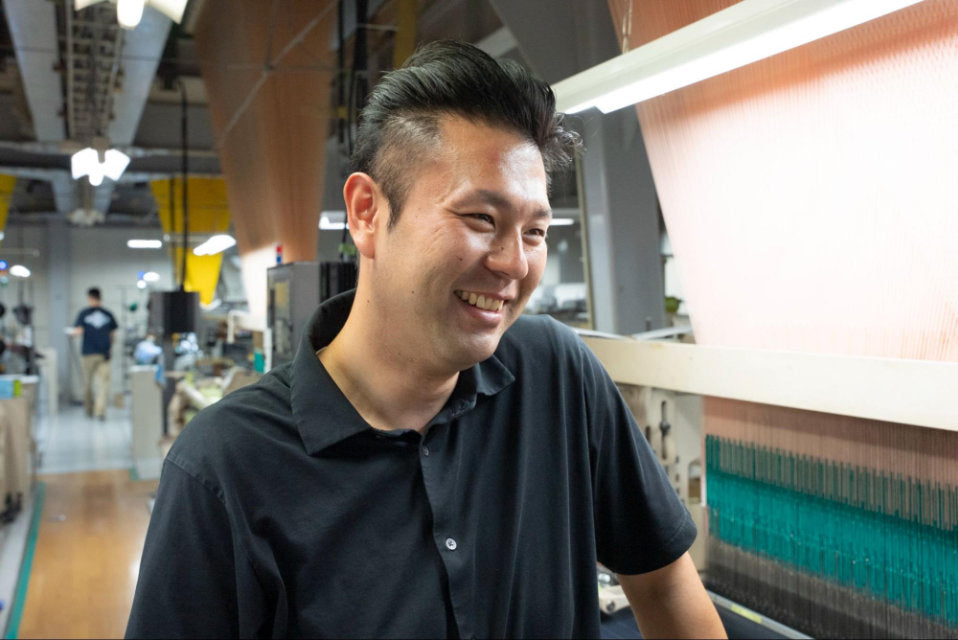
A bridge between craftsmen and customers
Interviewer: Fujie
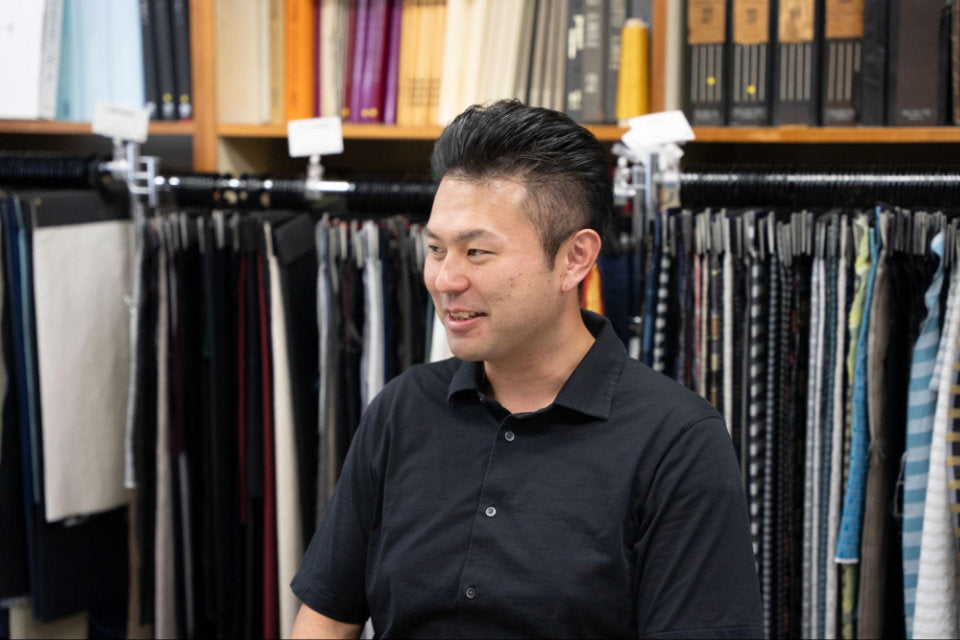
As a sales representative at Makita Shoten, Fujie is responsible for discussing fabrics, arranging threads, coordinating with artisans, and even shipping. He understands every step of the process, from weaving to post-processing, and supports the production area as a "banko" (store manager). His job is like a hub that connects people with textiles. He visits the site, touches the threads, and sometimes tries his hand at textile design. We spoke to him about his journey and his honest passion for manufacturing.
Q. Please tell us about your daily work.
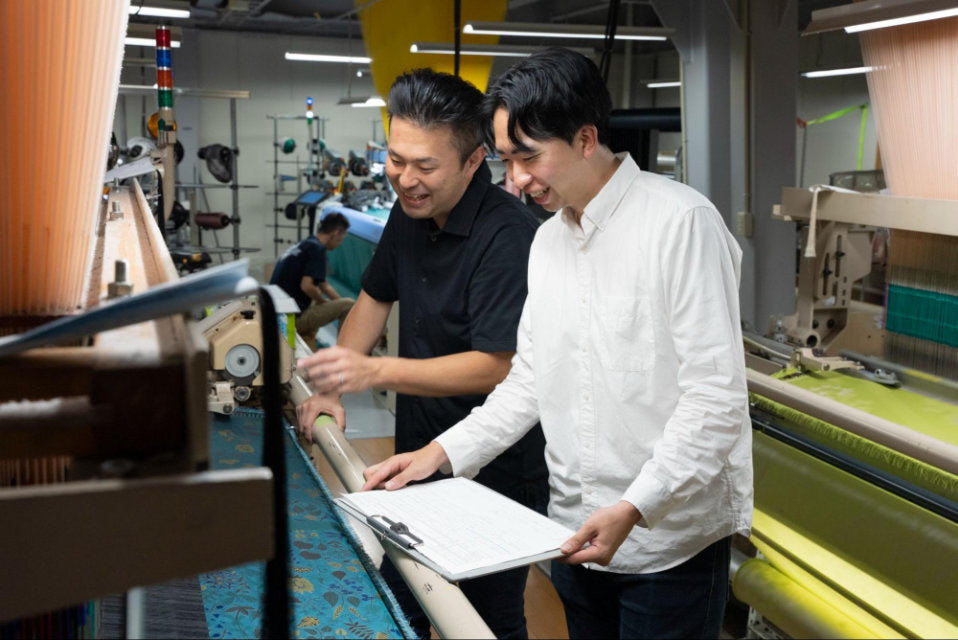
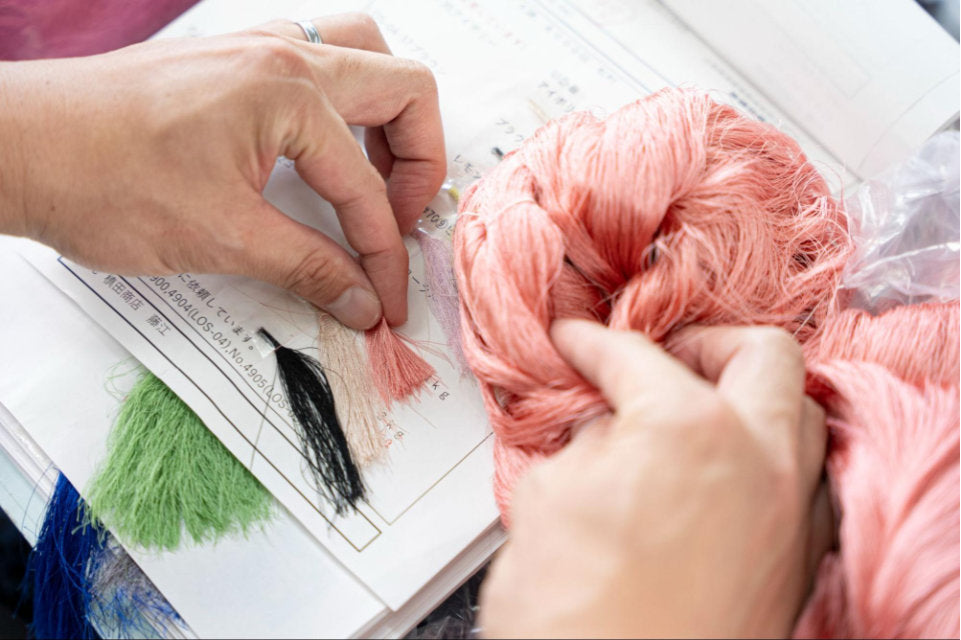
I am responsible for production management, which some people in the production area call "Bantou" (clerk's office). In addition to communicating specifications to weavers and preparatory process artisans to manufacture umbrella fabric, I also order threads, handle the loading and unloading of items for exhibitions, and handle simple fabric designs. Each staff member communicates with the customer regarding the fabric they request, but since the number of looms is fixed, I centrally manage the ordering of warp threads to be loaded onto the looms. Recently, we have been weaving more and more original fabrics for Makita Shoten, so it is important to keep track of order quantities and order contents, and to coordinate with other staff members.
Q.What kind of interactions do you have with the craftsmen?
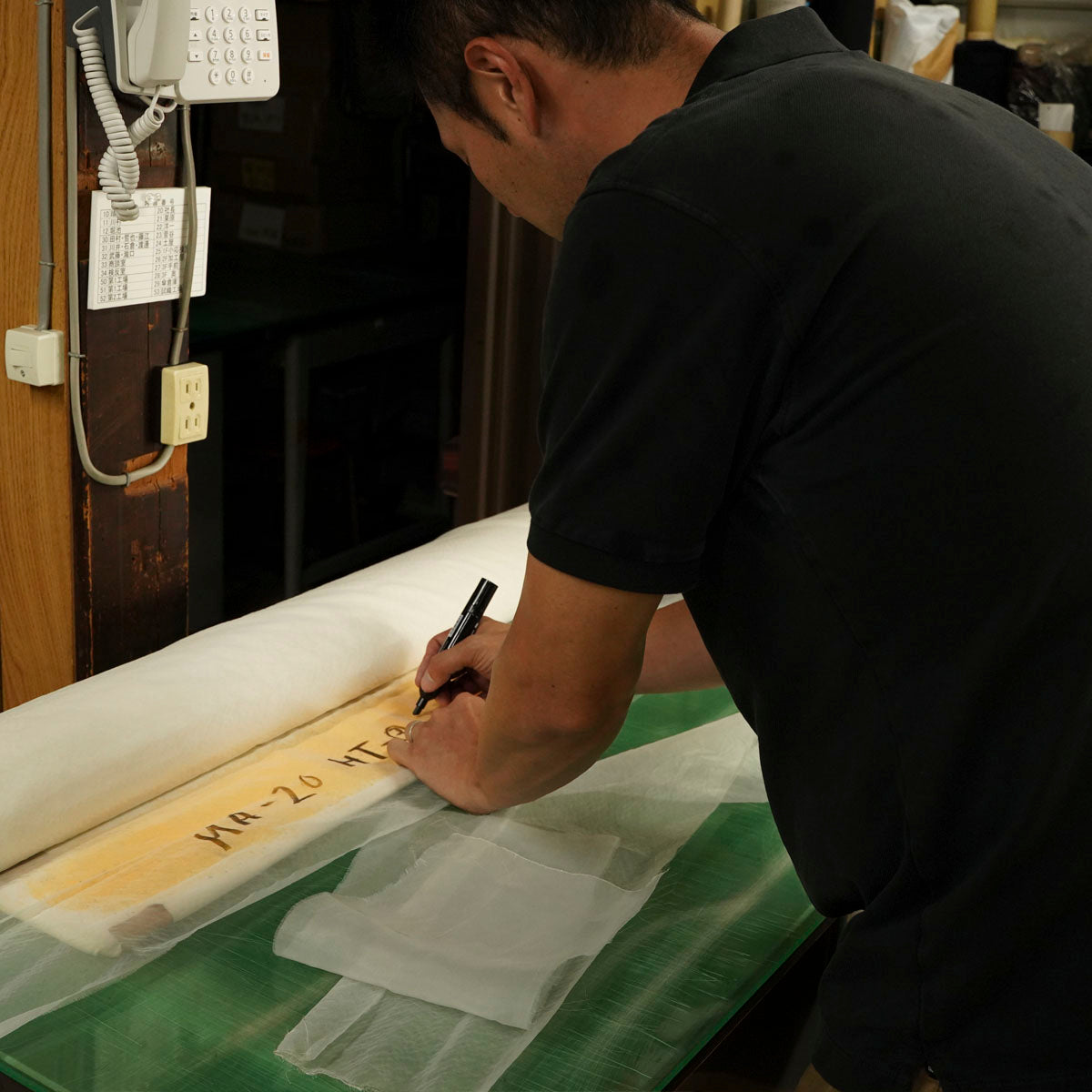
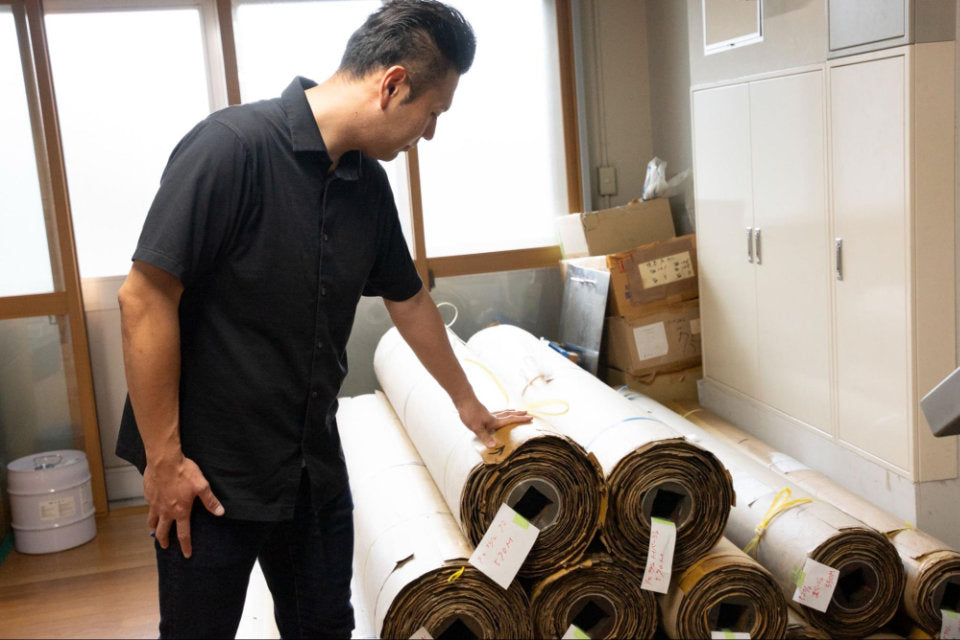
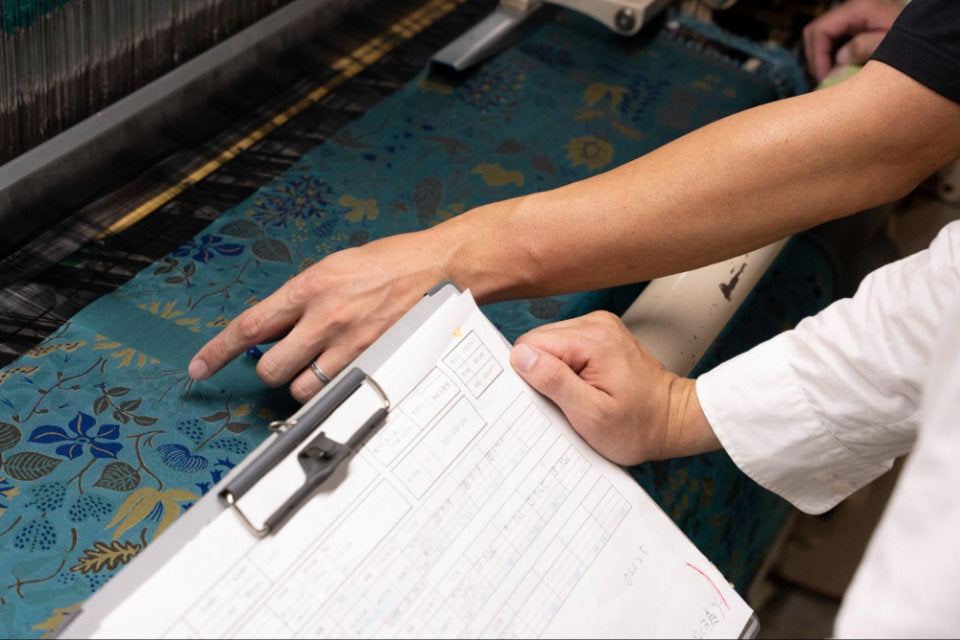
Basically, I always go and meet them in person to discuss what kind of fabric I want to weave. This goes for weavers, dyers, and warpers. I always visit the warper to check and prepare the fabric so there are no mistakes in the complex warp stripes. When I go to meet them, I often get asked for advice on various things, such as "My machine is not working properly and I'm having trouble" or "My omaki (thread that has been wound around the warp threads during warping) is heavy, so I help them out as they come up with the solution. At its heaviest, omaki can weigh nearly 80 kg, so it takes a lot of effort to carry it.
Q. Listening to you talk, it seems like you have great communication skills!
In fact, when I was a child, I would leave the house by myself before going to kindergarten, go around the neighborhood, and come home with mountains of sweets (lol). When I started kindergarten and this routine was no longer an option, my mother told me that the neighbors were worried and asked me, "You haven't come around recently, are you feeling unwell...?" I don't remember this myself, but it seems I had a friendly personality even back then (lol).
Q. The scene where you were drinking tea with the weaver and offering him a mandarin orange was very memorable (laughs).
Could you tell us what is rewarding about your job?
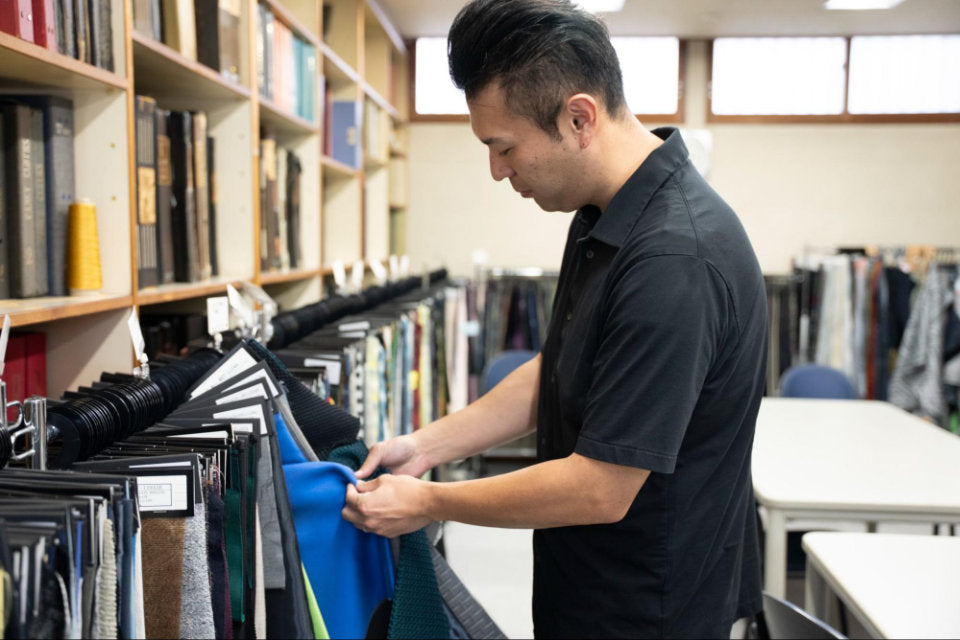
To be honest, at first, there was so much I didn't understand that it was difficult. However, when I was in charge of fabrics at the beginning of the company, talking to customers at an exhibition, I started to feel like "I want to make fabrics like that myself," and so I started making woven fabrics. Fabrics involve a variety of fiber materials and structures, so I became very knowledgeable about textiles.
Q. Do you also do textile design?
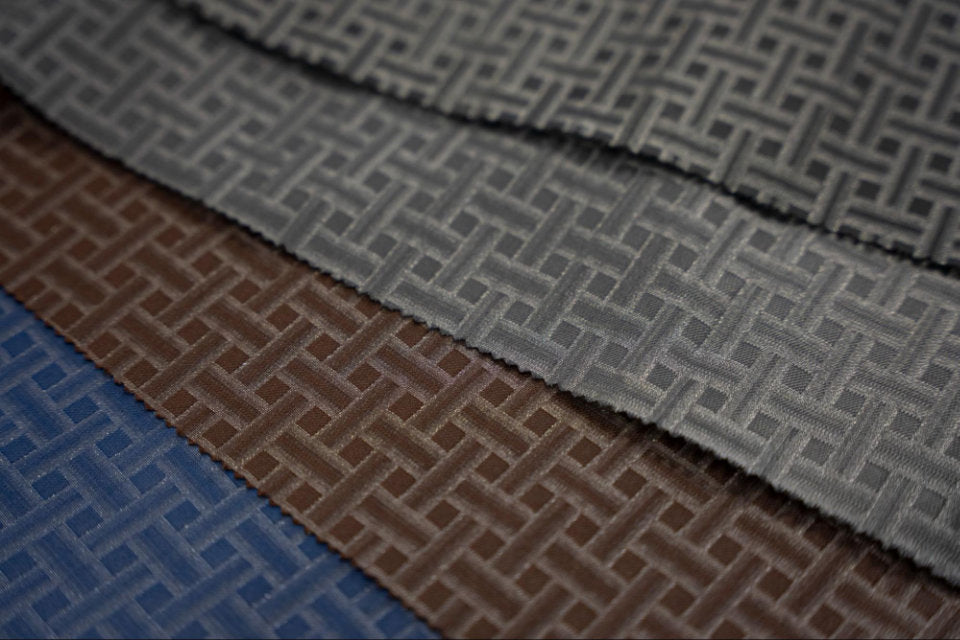
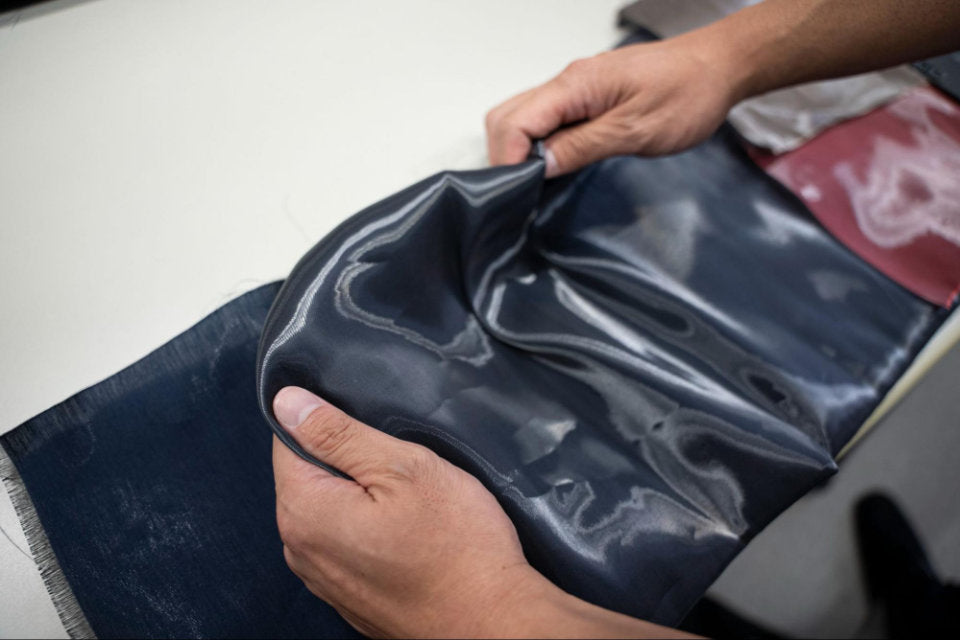
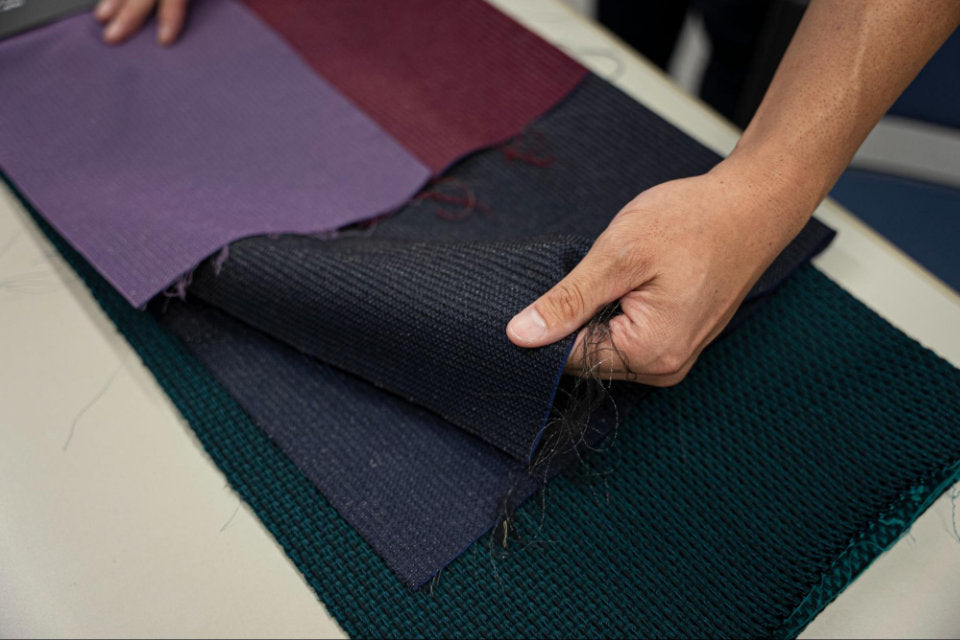
It's not exactly a design, but you can tell it's a simple dobby weave just by looking at it. I wove a sample after considering the thread and weave, and it won an award at PTJ (Premium Textile Japan), which made me so happy that I started weaving various samples. I like monofilament thread, so I tried to make a totally new fabric, and uploaded it to Instagram. I was so happy when I received a comment saying it looked like the ocean.
I learned about weaving at a Shikenjo study group. However, the look changes depending on the thread, so it's important to try weaving it. You can't imagine the weaving just by studying it, so you have to try making it yourself.
Q. That's why your conversations with customers are so persuasive.
I started out with clothing fabrics and have had the opportunity to gain a wide range of experience, from umbrella fabrics to production management and post-processing. I believe that it is because of this on-site experience that I am able to respond to technical consultations about things like weaving structures, thread characteristics, and the effects of processing.
One time, a customer requested that we make a fabric wider than usual, but we wondered if this might affect the water resistance, so we checked before delivering it. We found that the water resistance was indeed lower than usual. If we had delivered it as it was, it might have leaked. I think we were able to notice this kind of incongruity because we have seen and handled a variety of fabrics.
Q. What are the good points of Makita Shoten?
I think it's the high degree of freedom that allows me to take on new challenges. As I work in sales, I'm often out and about, and in that way I have a lot of interaction with a variety of people, so I enjoy having the opportunity to realize the ideas and opinions that I come up with.
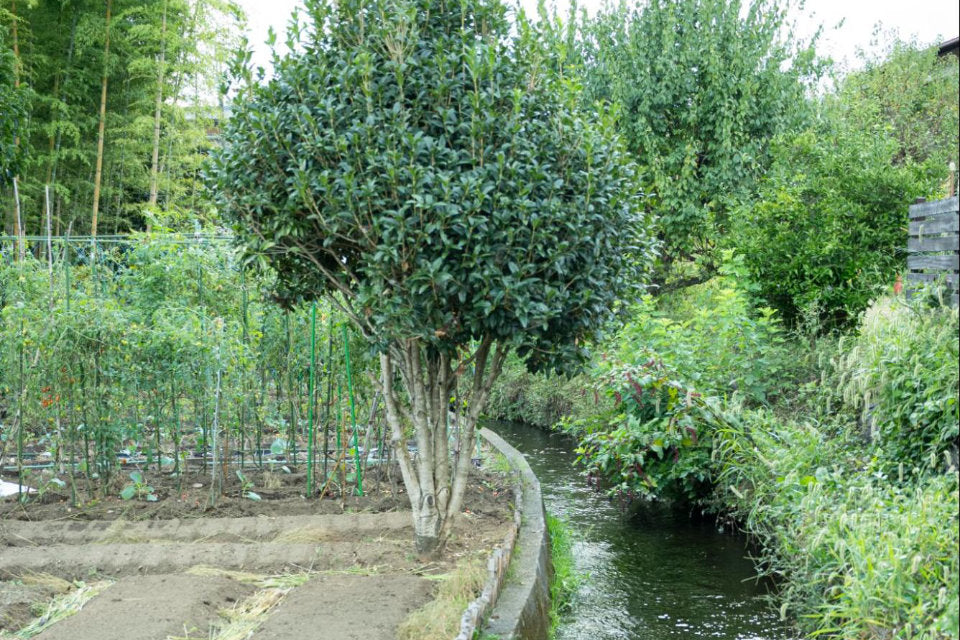
Also, recently, Inoue-san, Takao-san and I started a farm called "Makita Farm" on the grounds of Makita Shoten. We give the vegetables we grow at Makita Farm as gifts to all the staff, but onions and Shimonita leeks are very popular and sell out quickly. Starting this year, Makita Farm has been given a budget! We've been using it to buy seedlings and grow the vegetables we like, which is fun.
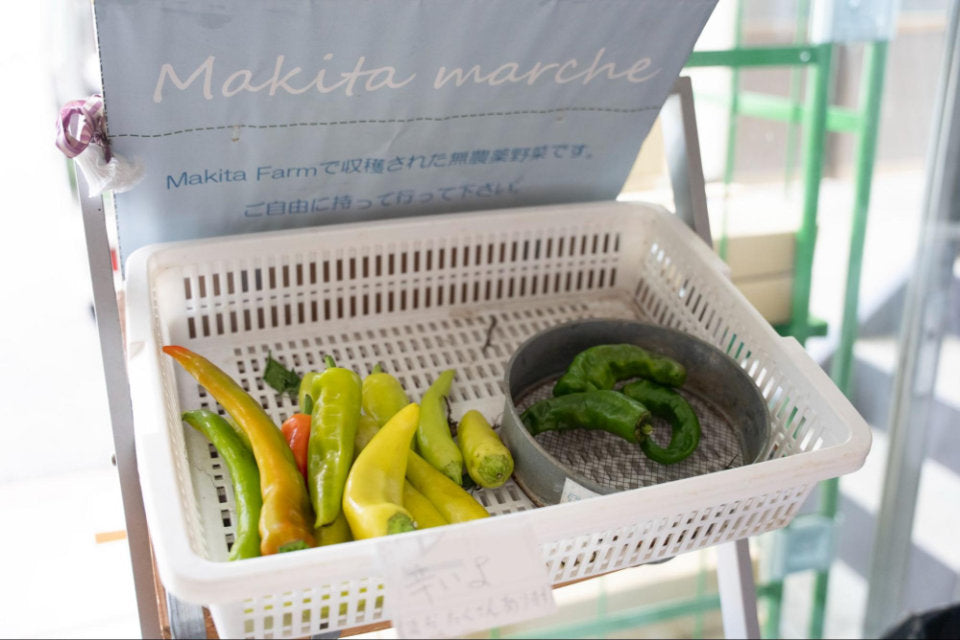
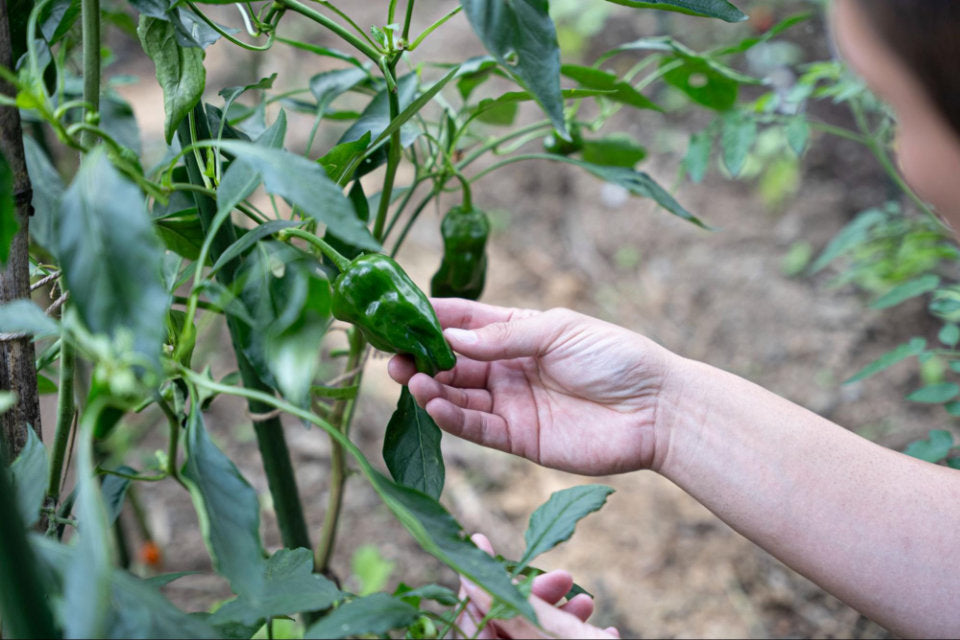
Q. During your break, you get to work in the soil in nature and take home some vegetables as souvenirs! It sounds like it would be good for both your body and mind.
Actually, my child is due this winter, and my company has encouraged me to take parental leave. This is the first time a male employee has done so, but they told me that it would be very difficult for a wife to look after a newborn baby on her own, so I'm grateful that they've taken that into consideration. Now that I have a reliable junior colleague, I'm starting to think that it might be okay to take parental leave.
Please create an example for the next generation of male employees!
Other articles

The charm and fun of weaving learned through umbrella making: Rika Takiguchi
>Read the article
The bridge between craftsmen and customers: Tomoki Kurihara
>Read the article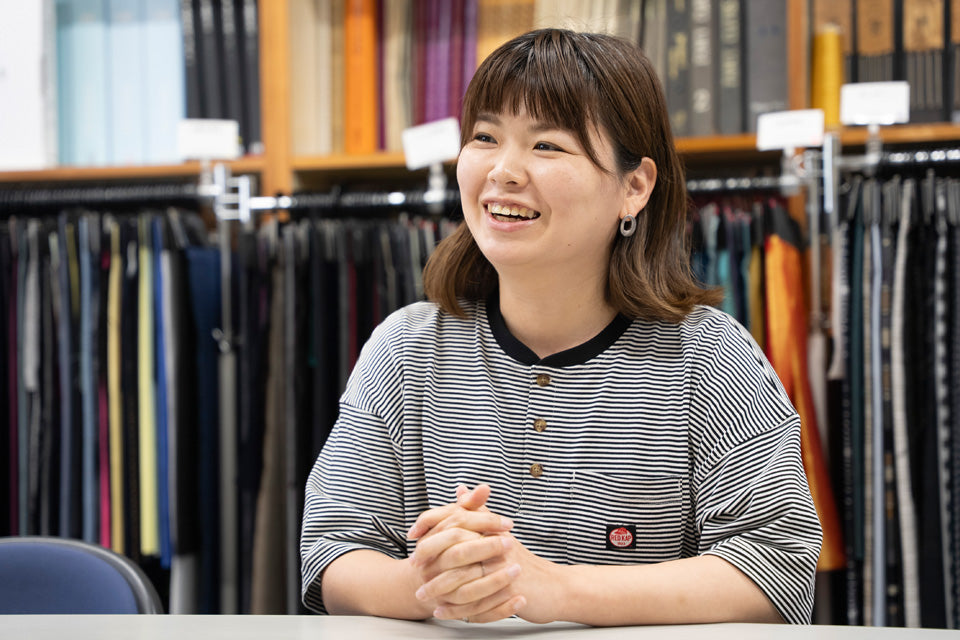
The work and thoughts of a textile designer who weaves senses: Misato Inoue
> Read article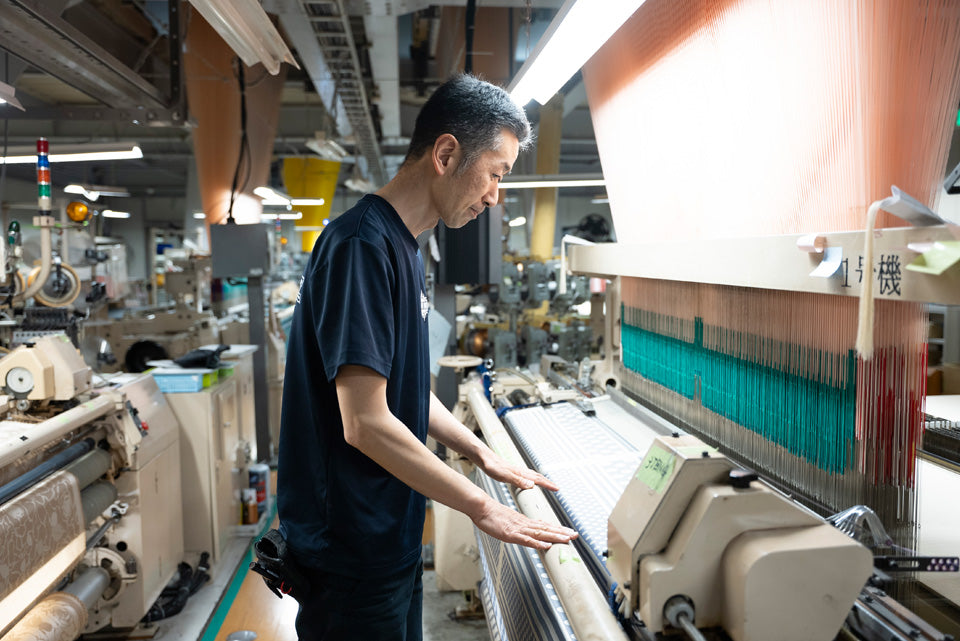
Daily conversations with the loom: Tatsuya Omata
> Read article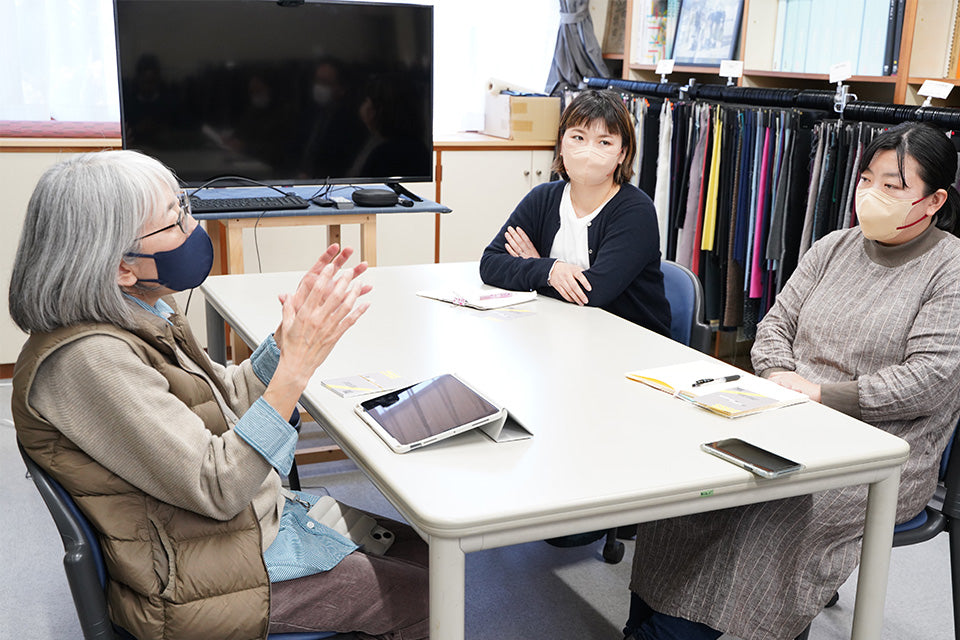
Makita Shoten's textiles evolve into a new era
> Read article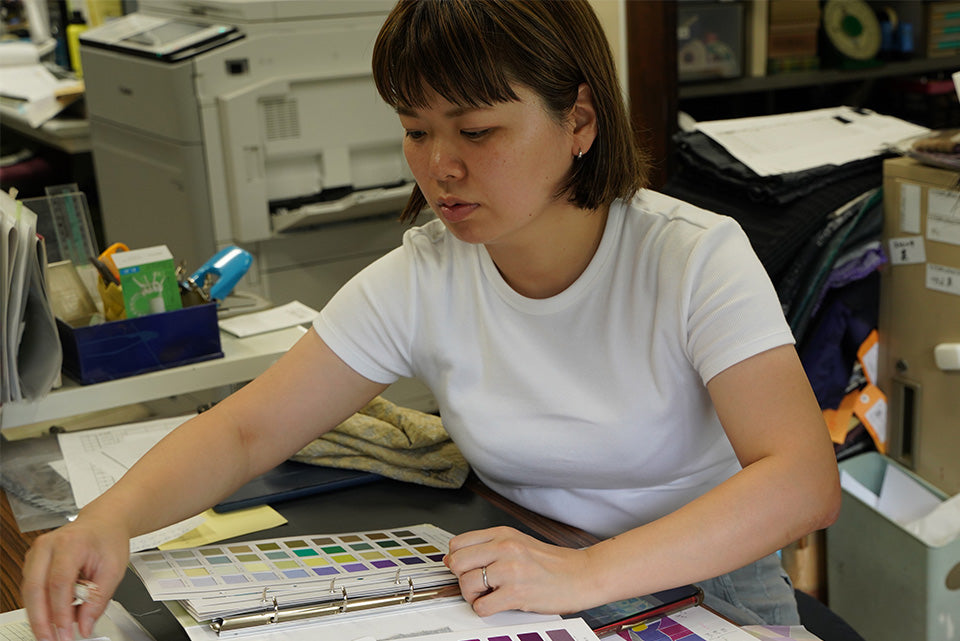
What are Makita Shoten's textile designers?
> Read article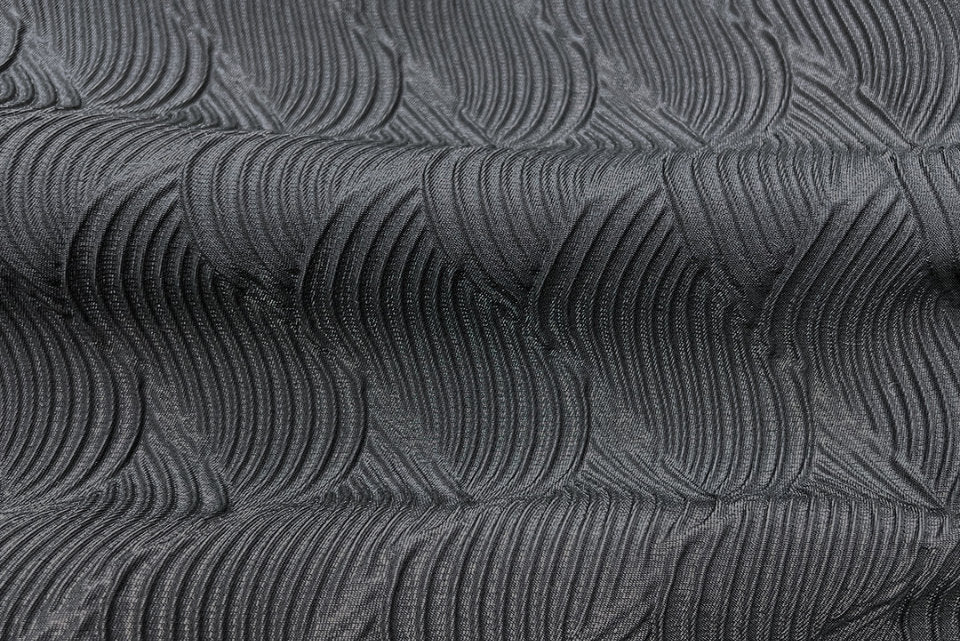
<Ordering original fabric>
[For corporate customers only] Would you like to create your own original jacquard fabric? We have a textile designer with specialized knowledge who will support you, so even if you are new to fabric making, you can place an order.
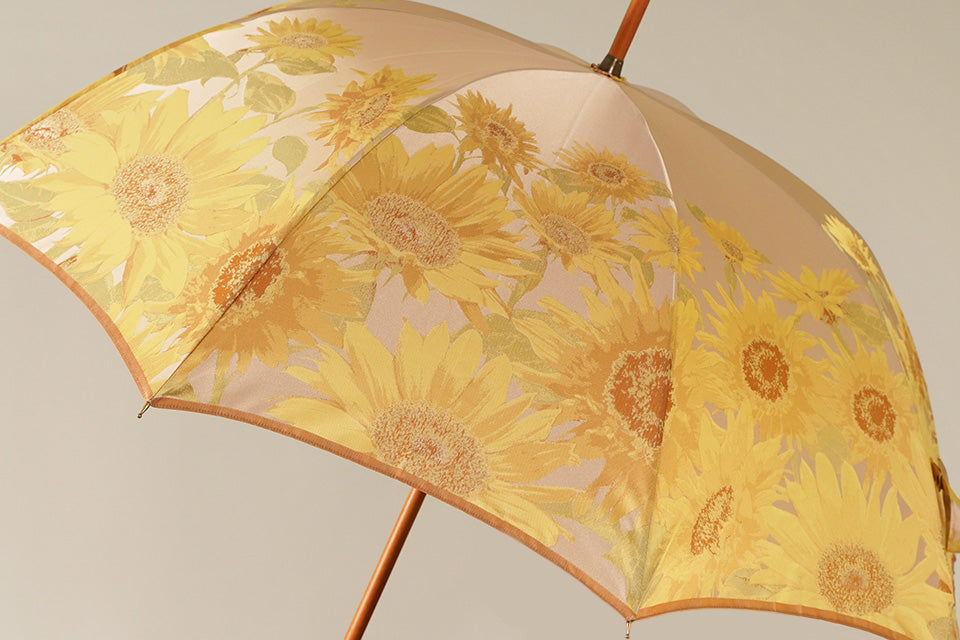
<Ordering an original umbrella>
[For corporate customers only] Would you like to create your own original umbrella? Makita Shoten is the only factory in Japan with an integrated production line from fabric to finished product.
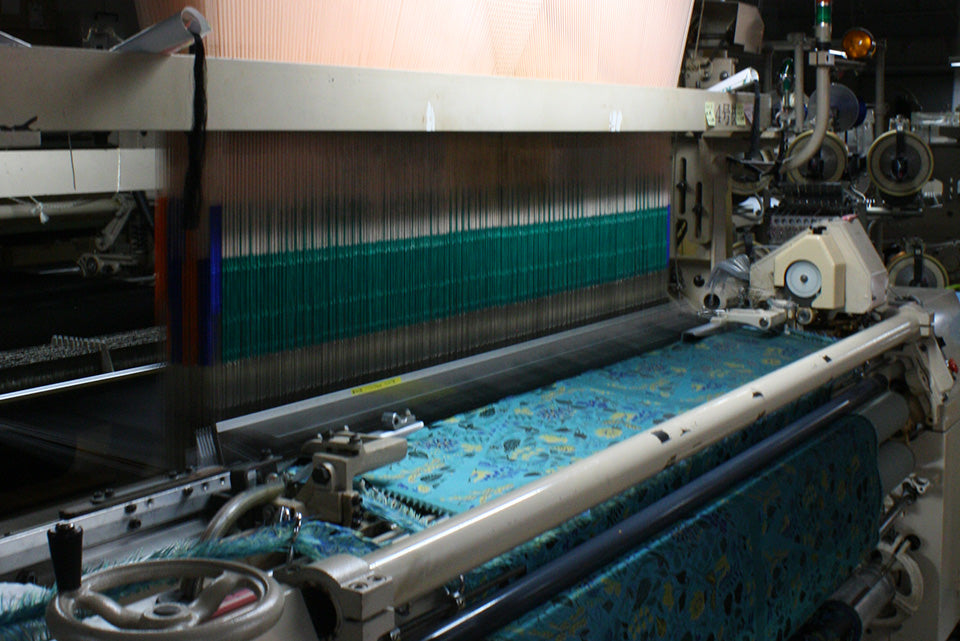
<Weaving umbrella fabric and clothing fabric>
There are six main steps that Makida Shoten goes through before their fabrics are finished, and each step is carried out by specialized craftsmen who have inherited the traditions of the ancient production area.