


Planning & Design team
planning design team
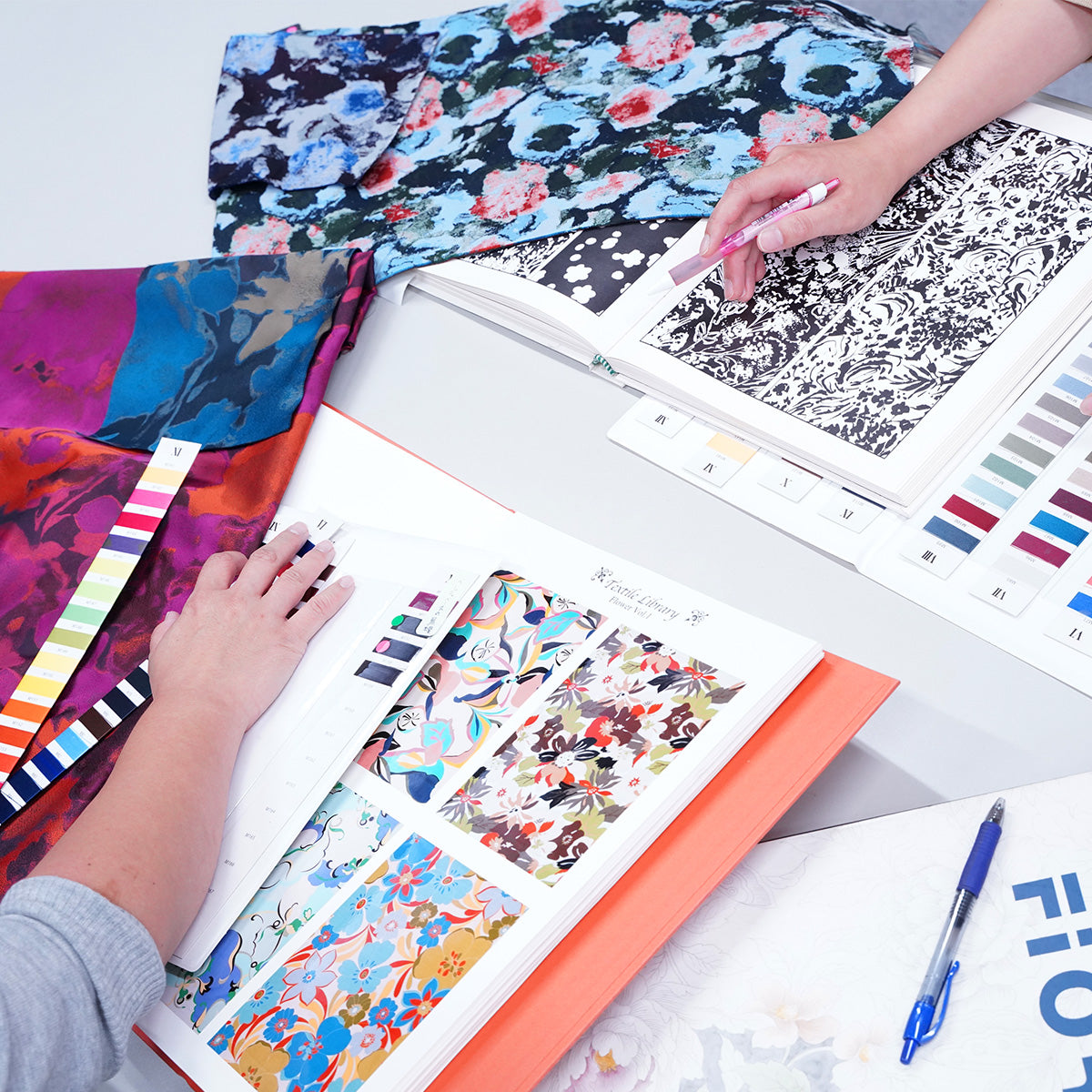
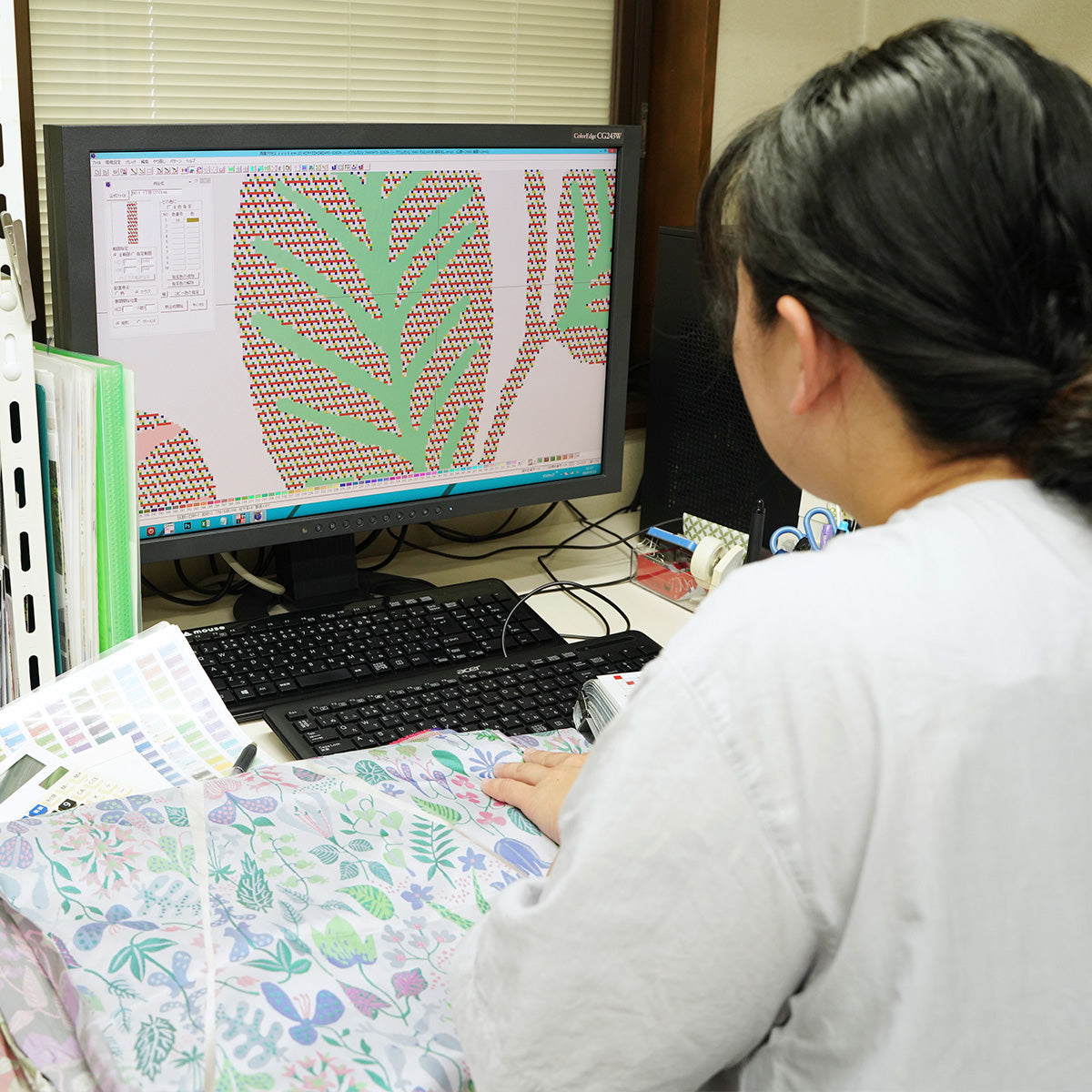
We are a team of fabric and fiber professionals who utilize the material knowledge we have cultivated over 150 years of history to turn our customers' ideas and requests into reality. Our resident textile designers will support you until the fabric is completed.
In addition, we also handle original fabrics and umbrella materials, as well as planning and designing for overseas exhibitions.
In addition to fabric planning and design, I am also responsible for a wide range of other tasks, including public relations using web content and social media.
Makita Shoten's textiles evolve into a new era
Tamura is a designer who has supported Makita Shoten's textile production since he joined the company.
We will pass on the techniques and knowledge inherited from our predecessors to the young designers who will lead the next generation.
What will they be thinking and conveying to these women as they move forward into a new era?
Interviewee: Planning and Design Team Tamura/Satoka/Misato
Q. You joined Makita Shoten as a result of a student collaboration, and are the first designer at the company who is not from the local area.
Misato : That's right. I joined the company in 2014, so it's been 10 years. Originally, there was a project called the "Mount Fuji Textile Project" at Tokyo Zokei University that started in 2009, in which weavers in Fujiyoshida City and students create fabrics and products.
It was during this project that I met Makita Shoten and we began working together on the project.
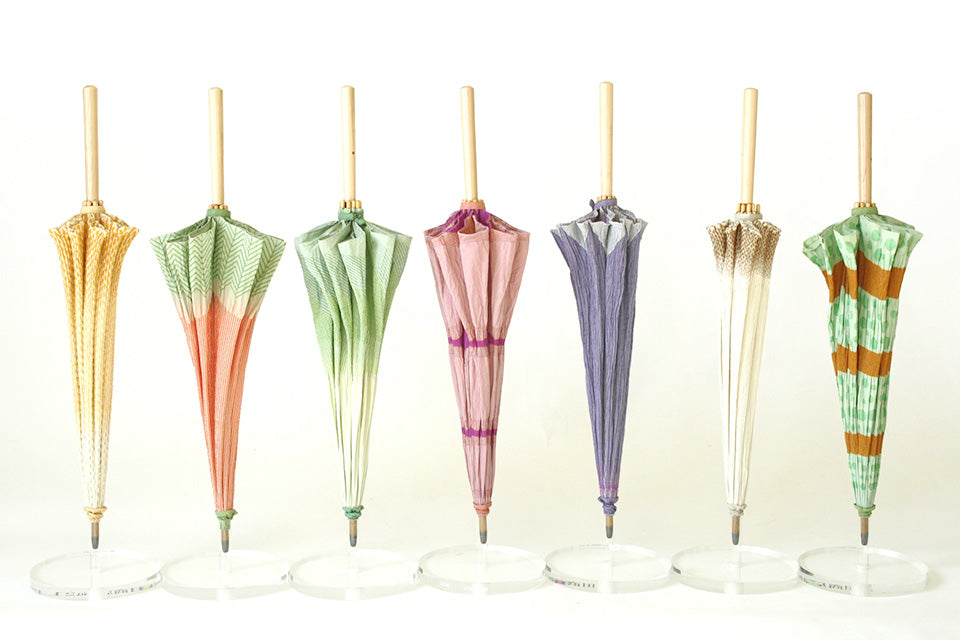
Q: "Nasai" is a commercial product, right?
Misato : Yes, that's right! It's a memorable experience that I brushed up after joining the company and led to the commercialization of the product.
Q: How do you feel after 10 years?
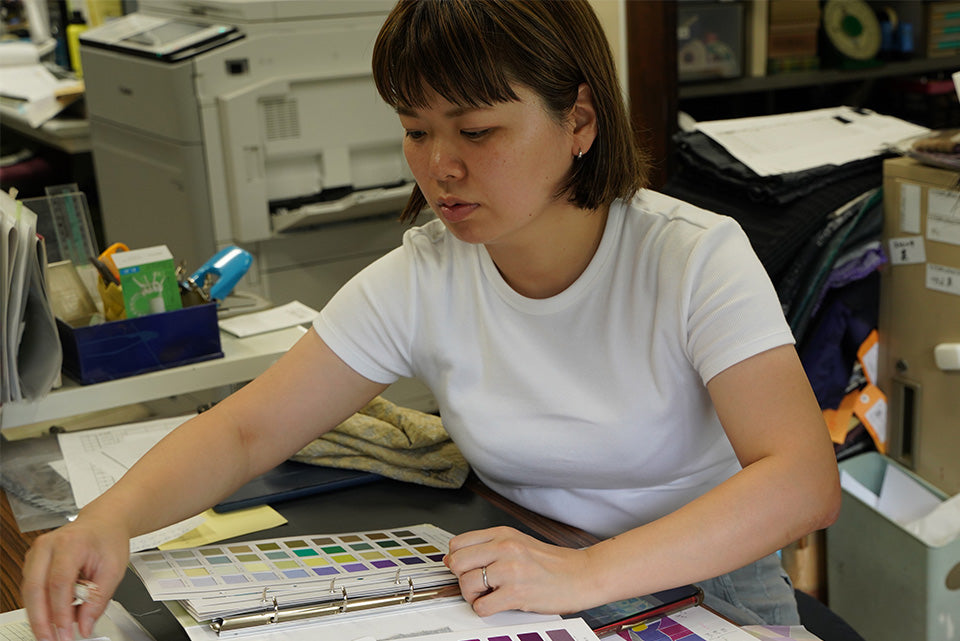
Misato : Ten years seems like a long time, but I feel like there's still a lot I don't know. I studied textiles at school, but initially Tamura-san said to me, "There's some open warp threads, try it out." Up until then I'd been processing and arranging things that already existed, but when I started making something from scratch, I really had no idea at first. I had to learn everything, from how to fold it up and down to how to tie it up and how to make it.
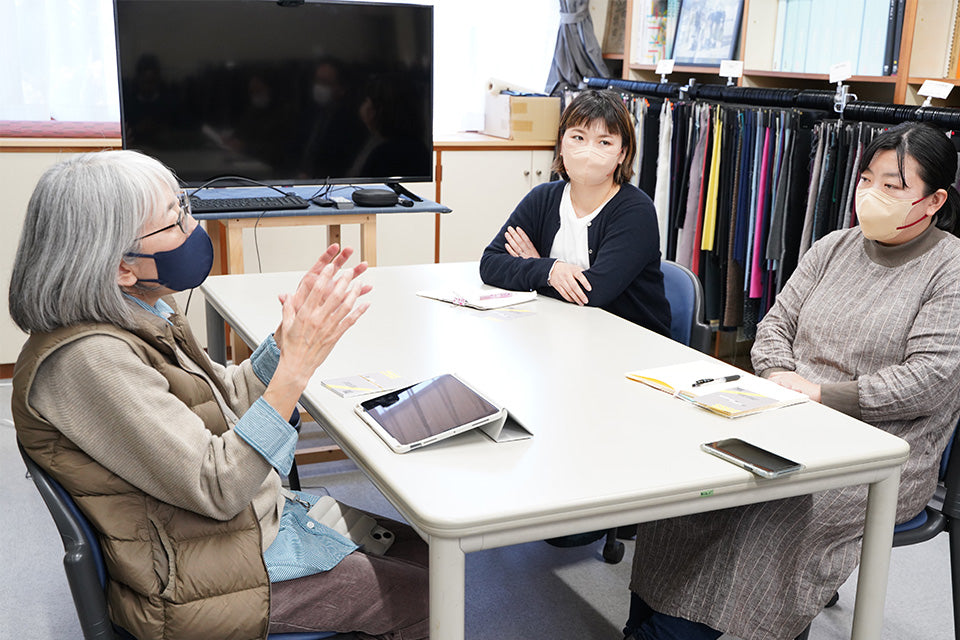
Tamura : When I first joined the company, I did everything from warp preparation to fabric inspection. At the time, there were only two people in the planning department, and Makita Shoten's work was mainly OEM, so I had no choice but to do everything. When I took over from my predecessor, there were no proper handover documents, so I remember having to create the pattern card data from scratch.
Neither Misato nor Satoka have any experience in that area.
Misato : I work with clothing brands, and Satoka does a lot of web-related work, but I really feel that actual experience is important when it comes to weaving.
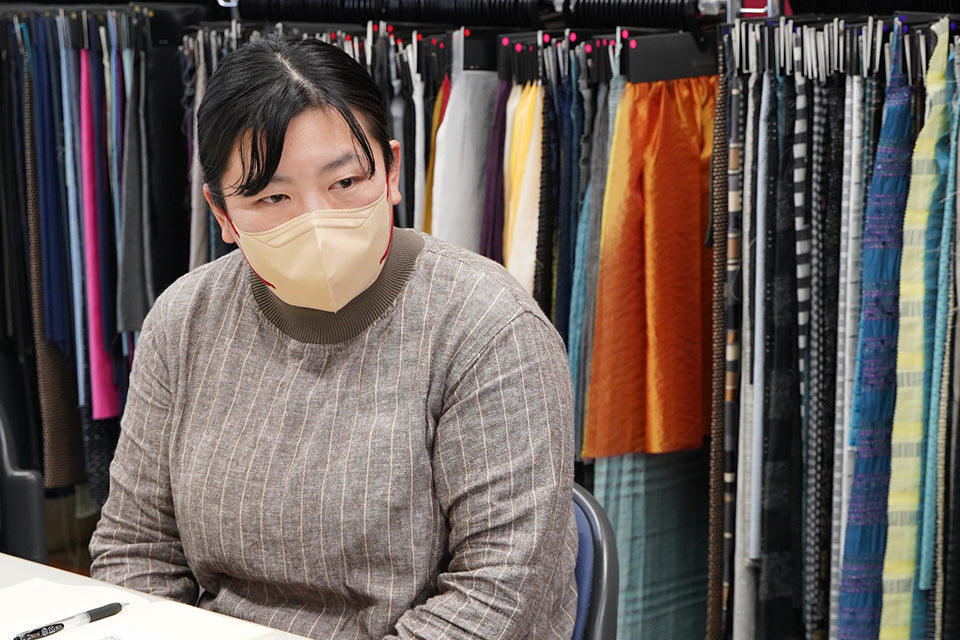
Satoka : Compared to the past, we're now getting more work on original umbrellas. As the umbrella field has expanded beyond just fabric, I've realized the importance of sharing information within the company even more. By digitizing things like thread orders, pattern paper, processing information, and product numbers, it's easier to take over, right? If a colleague goes on maternity leave, for example, we can keep things running, and I think that ultimately, Makita Shoten will be a comfortable working environment.
Even if you don't have experience, you can transfer knowledge and you'll be able to use it, which will help you gain experience.
Q: I see, sharing is important. In a sense, it's like turning something into a recipe. But aren't there some parts of turning something into a recipe that are difficult?
Tamura : I think it's something you won't know until you try it. Even if you understand the method and process to some extent, you'll discover more than you can imagine by trying it out, such as things you'll notice and issues you'll encounter.
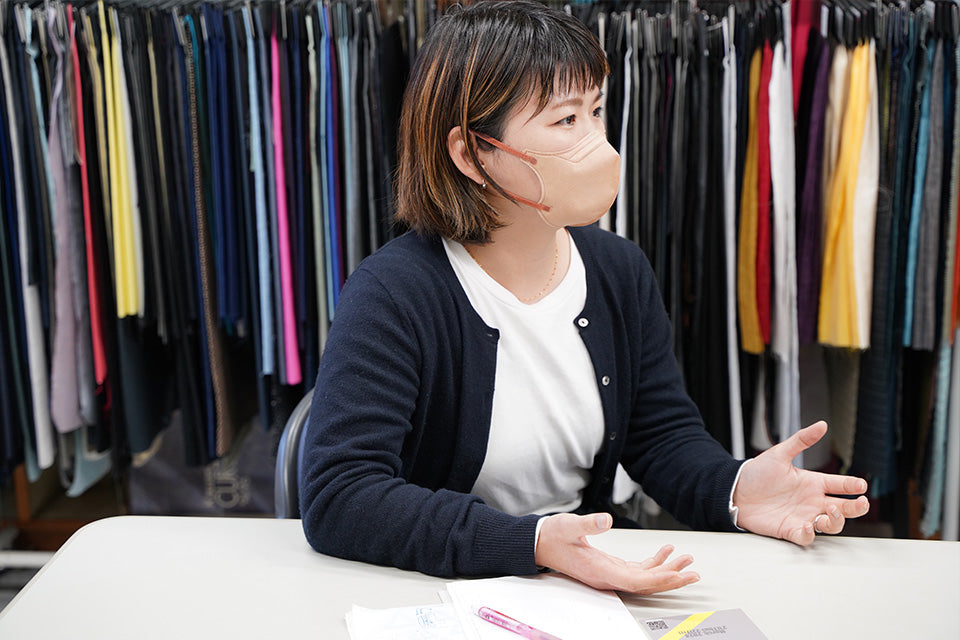
Q: So it's not that easy to just say "take over." Misato, as a designer, what did you take over from Tamura?
Misato : That's the difficulty of design. There's no right answer. For example, Tamura-san has been working on a checked umbrella, but it's not square. It's a little vertical. That's because it calms the eye. I show him my sketched design and he makes corrections, saying, "It would be better if you did it like this." There are many things you can't know when it's just a flat surface, at the drawing stage, and as you said earlier, you can't know the right balance until you try it. I hope to learn that while we're working together like this, but at the same time, I'm learning every day that there is no one right answer in design.
Tamura : Umbrellas have limitations. First of all, there's a basic shape, and you have to consider functionality such as water repellency and UV protection. But when it comes to fabrics, there's a little more freedom. At the same time, it's important to determine what the customer wants. What's more, they change with the times and trends, so you have to keep thinking about how to reflect that. It's difficult to determine because they're made up of a collection of many things, such as the weave, type of thread, and pattern. You'll hit a wall wondering what to do. But that's what becomes experience.
Misato : I inherited the knowledge, but I have to gain experience myself.
Tamura : Well, there were people before me who had a lot of knowledge, and they would easily change the pattern, and they would touch the fabric as if they were tasting it and say, "This is good."
It was also featured in PTJ (Premium Textile Japan), but in the past it wasn't as original as it is now, and was basically OEM, so I think it can be said that we are taking on more difficult challenges now.
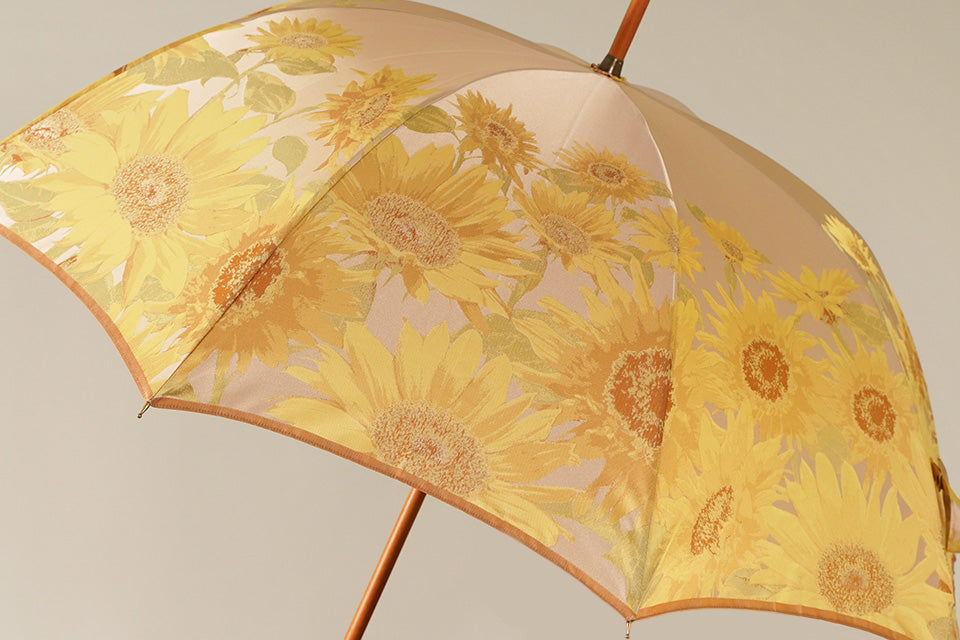
Tamura : The timing of Satoka joining us was also good. We had someone who could do graphics.
Satoka : I was surprised. I was scouted. They asked me, "Why don't you come work for us?" and we started making original umbrellas. I joined the company in March 2011, and although I had no idea about fabric weaving, we decided to make floral and sunflower patterned umbrellas, so I started from scratch and learned as I went.
Tamura : I could do the graphics, but of course I didn't know what it would be like when it became an umbrella. So I didn't know anything about the layout, so I worked hard and made a lot of NGs.
Satoka : When I draw digitally, I tend to blur the edges. However, having to draw within limited conditions and colors, and then turning it into fabric, let alone an umbrella, was an extension of what I'd done up until then, but also something completely new. It was fascinating, and I feel like I could keep doing it forever. But at the time, I was just working frantically, and I didn't know what I was doing, and I couldn't imagine what the finished product would look like. Gradually, it turned into an umbrella, and I was so happy when I made my debut at the Gift Show as the Eori Kirie series.
Misato : I started by studying weaving, so when I think about it, I always start with weaving. That way, it turns out exactly as I knew it would. But sometimes, something I draw without knowing anything about it ends up being a more interesting fabric. I was given the choice between weaving and dyeing at school, and I chose weaving because I wasn't good at drawing, but I also think it's good to start with drawing.
Tamura : I think having Misato-chan, who handles weaving, and Sato-chan, who handles graphics, has increased what we can do. For example, if someone comes to us wanting to weave a graphic in jacquard, Sato-chan can help. She has experience with graphics, so it's easy to understand what they're trying to achieve. Misato-chan provides support from behind the scenes, dividing it into 13 colors, 8 colors, or the inverse of the weft thread, or texture, or 4 threads with 3 colors, and Sato-chan can also communicate with the client.
Now that we have a good system in place, I can say, "Go further!" If you can not only take what the designers say into account, but also add something extra, it will lead to the next step. It's boring if you just do it as is. Haha
I think the key to a relationship with a client is to exceed their expectations, and one of Makita Shoten's strengths is that we can do that. It's important to know about the fabric and materials, but it's also important to experiment well in advance, such as dyeing the actual yarn and weaving it as a test. This kind of experience allows us to do creative things.
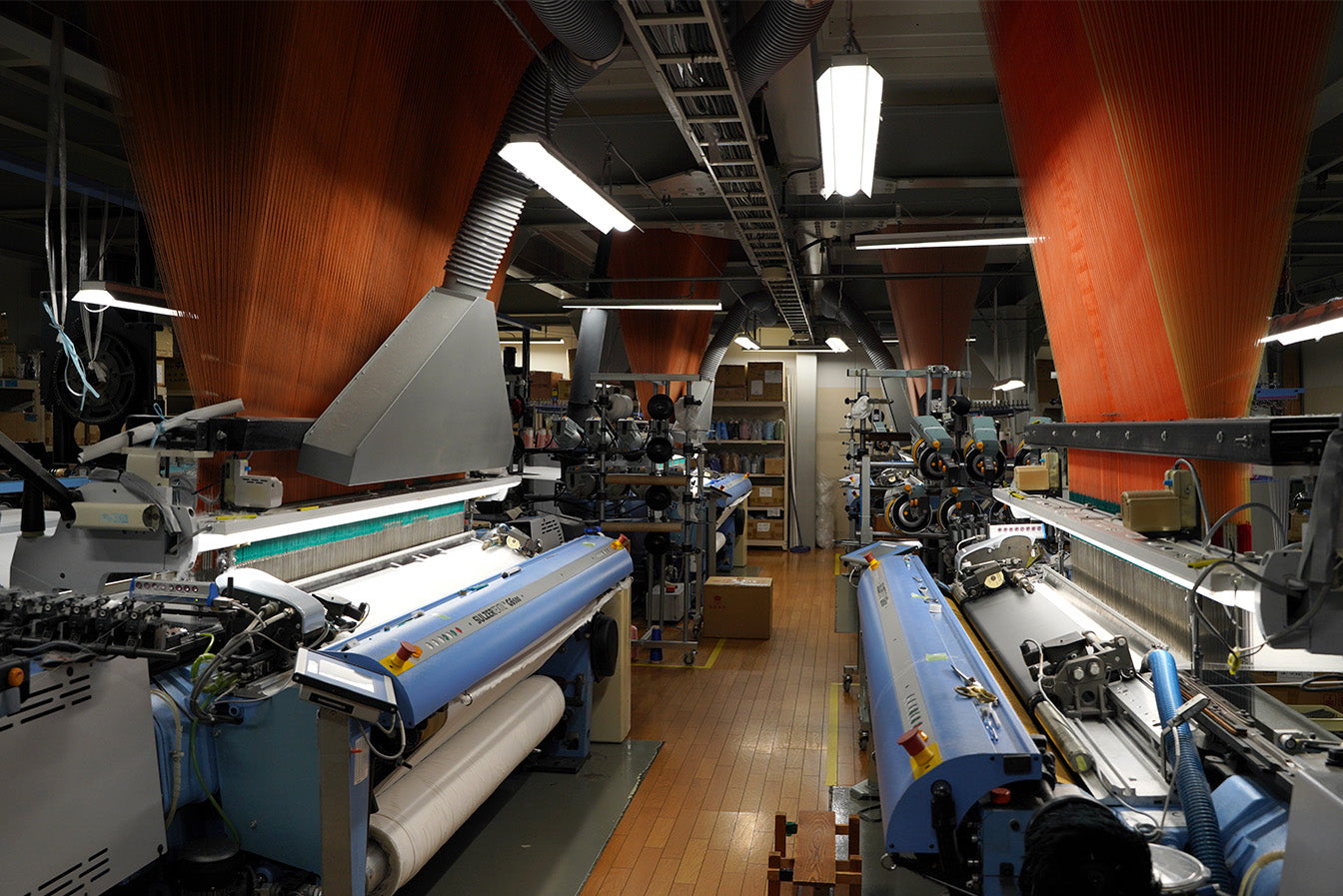
Misato : The warp threads on the loom are often black. When I submitted to Milano Unica, most of the fabrics were black or shiny. Black fabrics are very versatile and certainly popular, but I do feel like I want to break away from that style at some point. I'd like to create something that lets you have fun with color, at least once a season. In that sense, it would be good to have beige or something for the warp threads.
When I talk to designers, I tell them that I can dye the warp threads and create original designs, but at the same time, it takes time and lots, so I often end up using the running black warp threads, which tends to make the fabric look dark. That's why I try to design fabrics that allow you to play with texture and three-dimensionality rather than color.
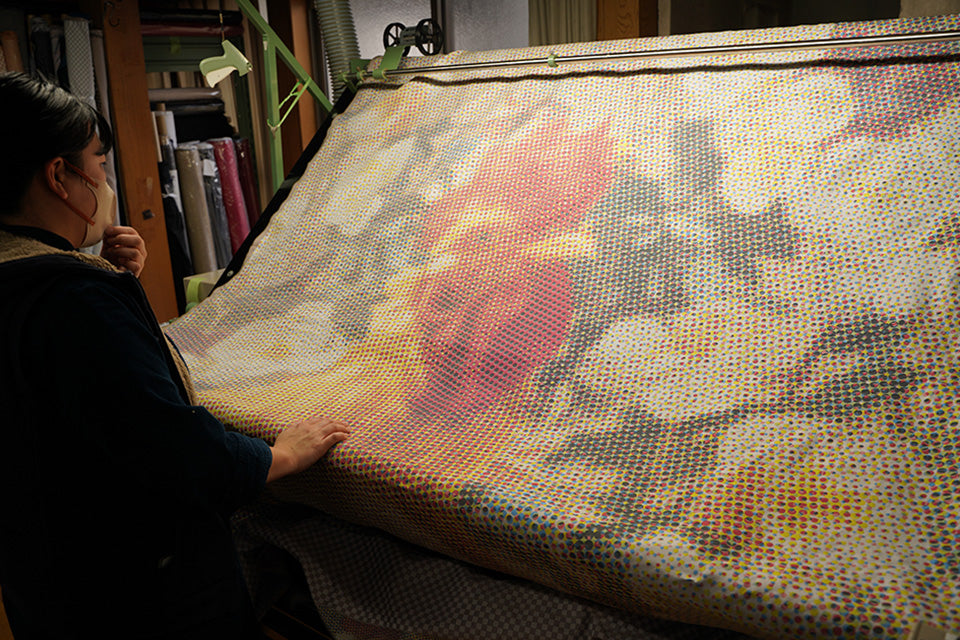
Satoka : From a graphic perspective, I want to create something that shows off a wide pattern, especially a large one, and express a picture on the fabric. Makita Shoten has a loom that can weave a single pattern in a width of 180cm, so I would like to make use of that. I would also like to try something with a watercolor or digital-style touch, something that changes the color and impression.
Tamura : I think it's great that we can create something like that, where Misato and Tamura can play around with the organization and add depth to Satoka's drawings.
Q: Have you always loved drawing, Satoka?
Satoka : That's right. My first encounter with art was doodling when I was in elementary school. I've continued drawing ever since, never getting bored. I like art with vivid colors, like Marimekko. In that sense, I like fabrics with a darker strength rather than vague fancy or pastel colors. That's why I think I could make something that makes use of the black warp thread.
Tamura : But you haven't given it your all yet! (laughs)
Sato-chan is also a craftsman, so she's always in front of the screen, facing it, right? Misato-chan cuts out samples and does other things, and uses them in planning and design. Sato-chan, you can express yourself more, right?
Well, having three of us allows us to do a variety of designs, so I think we can spread the word on the web page that we can create fabric from graphics. And we also have Natsumi-chan!
The importance of conveying Makita Shoten's message
Highly skilled designers and craftsmen, and well-equipped facilities are the defining characteristics and greatest strengths of Makita Shoten. This is what makes it possible to create textiles and umbrellas, and what initiatives have been launched to spread Makita Shoten's vision to as many people as possible?
+Interviewee: Natsumi from the Planning and Design Team
Natsumi : I'm Natsumi. I've been with Makita Shoten for five years. I'm in the design planning department, and my work mainly involves public relations and e-commerce.
Tamura : We asked him to come when we were trying to strengthen our e-commerce business.
Natsumi : Yes! I think my job is to communicate the merits of Makita Shoten and its products through words.
Tamura : In reality, it's an important job that can't be done half-heartedly. The person in charge has to take it seriously. Natsumi, you're also good at writing. When I look at reports to clients, you're able to convey things succinctly and concisely.
Natsumi : Actually, I graduated from the Faculty of Letters. So, conversely, I knew absolutely nothing about textiles. When I was looking for a job, I looked at the website and saw that Makita Shoten was weak in communication skills, so they wanted people like that to come work for them, which made an impression on me. I graduated from the Faculty of Letters, so I thought I might be able to help.
Tamura : It's becoming a valuable asset to the company. You can actually see the results in the numbers. I think it was good to have a clear goal for writing and uploading text. Because I can write text regularly and properly, I've been able to make good use of web advertising.
Q: What do you want to do in the future?
Tamura : With the increase in the number of young designers, Makita Shoten's strength is that it can take its manufacturing to the next level. With Natsumi joining us, we can now also operate an e-commerce site. That's why we feel we need to communicate more than ever before and properly communicate what we can do in various ways.
Misato : I'm also interested in developing sales channels for individuals, like turning children's drawings into fabric. Also, in terms of manufacturing, I'd like to be able to convey more of the fun of fabric, such as the unevenness that can only be achieved with fabric, the world of patterns that are created by pin tucks and shrinking.
Tamura : This region itself uses a method called yarn dyeing, where the yarn is dyed before weaving, but that's hard to convey in a photograph. It's probably hard for the average person to understand the difference between yarn dyed and piece dyed, too. Of course, we need to communicate this, but we also thought it might be good to think about it as a project.
Misato : Yes, yarn-dyed fabrics have an overwhelming difference in the depth and fineness of color. Also, as more people are seeing them, I would like to create fabrics with a texture that makes people want to touch them, like fabrics with a fur design.
Tamura : Nowadays, you're meeting more and more different clients, so you're gaining experience.
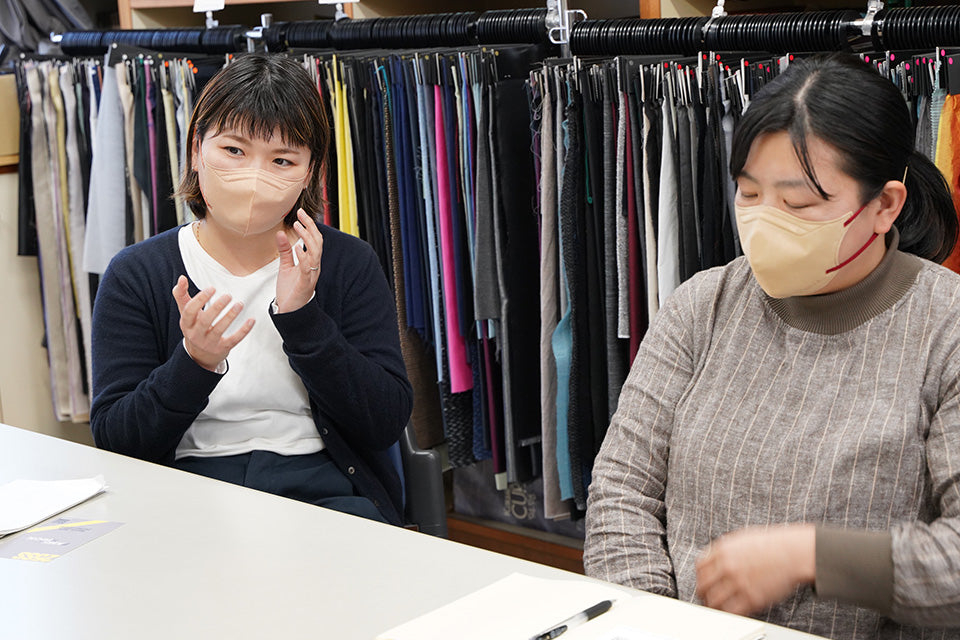
Natsumi : I think I'm probably closer to our customers. The technical terms used by our colleagues and things we take for granted might be hard for our customers to understand. We communicate in an easy-to-understand way precisely because we take our manufacturing process seriously. We want to communicate our commitment to detail, design, and color in a way that doesn't leave anyone wondering when they see our website for the first time.
Tamura : I think Satoka-chan mentioned the 180cm wide fabric earlier, but it would be a shame to use it only for clothing. It could be used for interior design, right? We actually sell the fabric overseas, and it's used for interior design. The materials that Makita handles range from natural materials to materials that require durability, so I think there is potential in the interior design field.
Misato : The appeal of the 180cm wide fabric, this way of showing it is important. Rather than mass producing it, I want people to know that we can work together with architects and designers to create something special for each individual, or those who create spaces.
Tamura : Now that Makita umbrellas are so popular that they are synonymous with them, perhaps it's time to let people know that because Makita can make umbrellas from cloth, it can do so much more.
Misato : Textiles are great to see up close and touch, but they're also a mysterious material that you can enjoy by pulling them down and seeing the undulating patterns and textures. At Fuji Textile Week, artists presented works that boldly used fabrics in space, and we thought it might be a good idea to create a space where people could see our own fabrics.
Tamura : The difficulty with showcasing 180cm fabric is that even if customers think, "Wow, that's amazing!", they worry about how to use it further, which makes it difficult to give it a concrete form. Makita can design fabric, but what about how to use it further, what happens when it's made into clothing? I think he can think about the shape of the clothing, convey that patterns can be developed there, and help customers imagine spaces and interiors.
Misato : I don't think there are many places that can do this much from scratch. That's why we want to continue to communicate and connect with our customers and the future, without putting any limitations on our design work!
Other articles
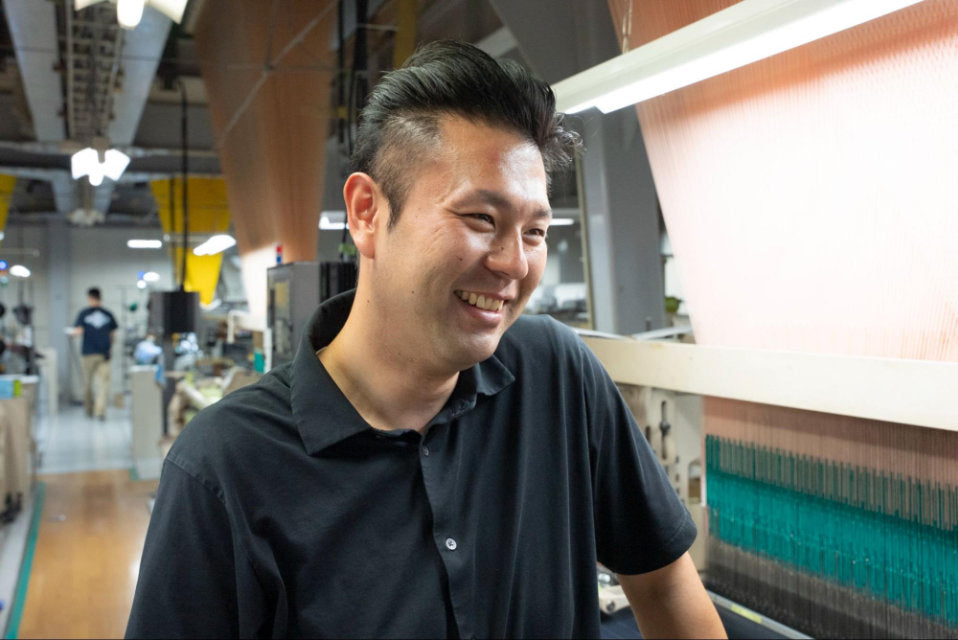
Fujie: Connecting the vision of textile artisans and brands to create something
>Read the article
The charm and fun of weaving learned through umbrella making: Rika Takiguchi
>Read the article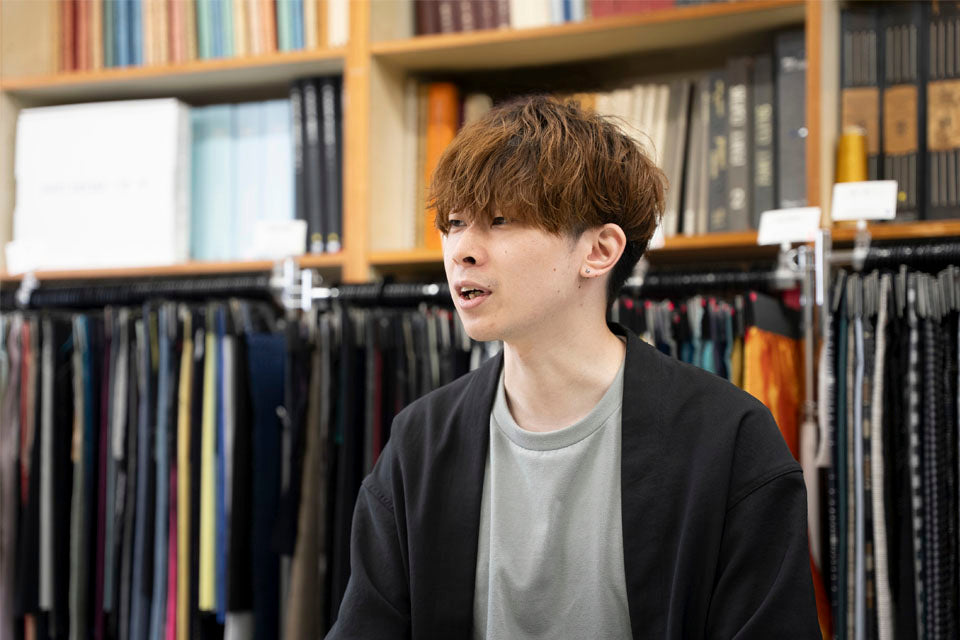
The bridge between craftsmen and customers: Tomoki Kurihara
>Read the article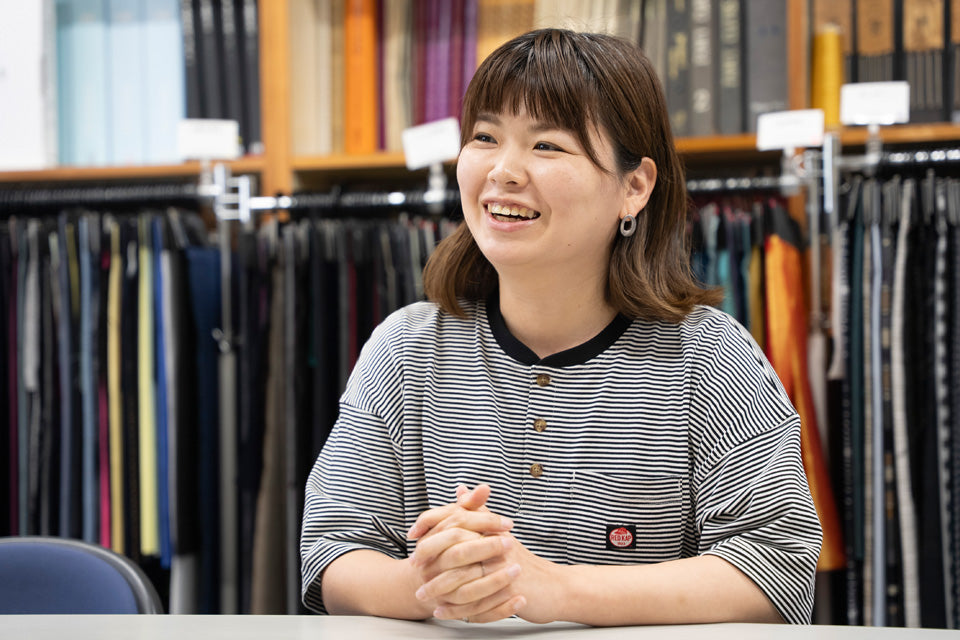
The work and thoughts of a textile designer who weaves senses: Misato Inoue
>Read the article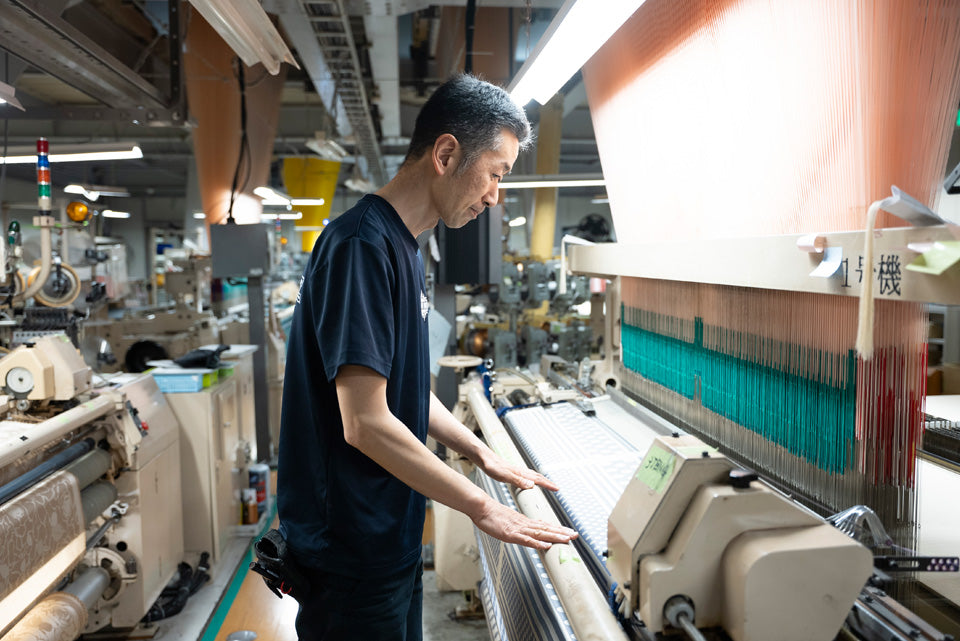
Daily conversations with the loom: Tatsuya Omata
>Read the article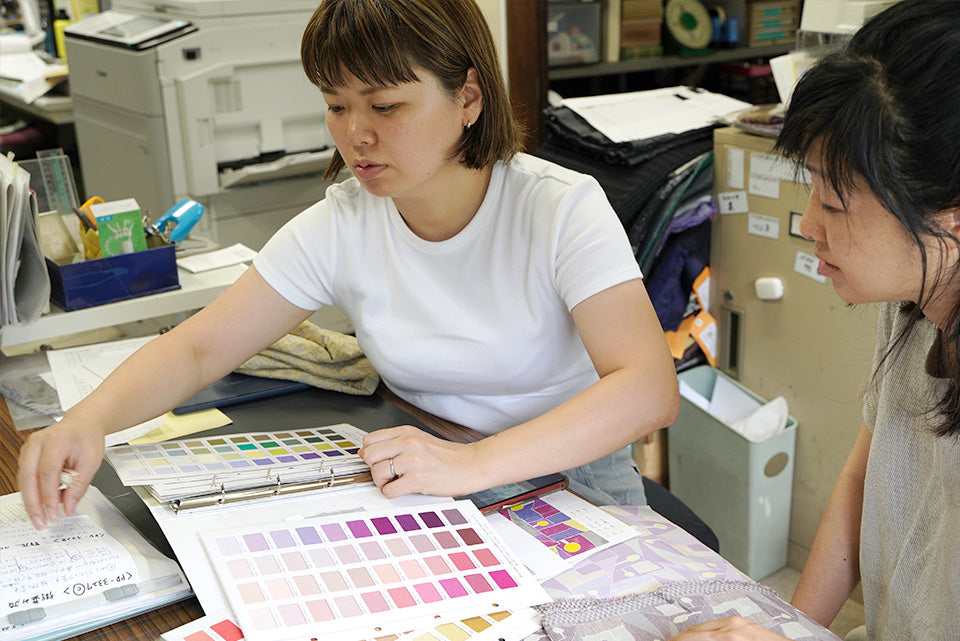
What are Makita Shoten's textile designers?
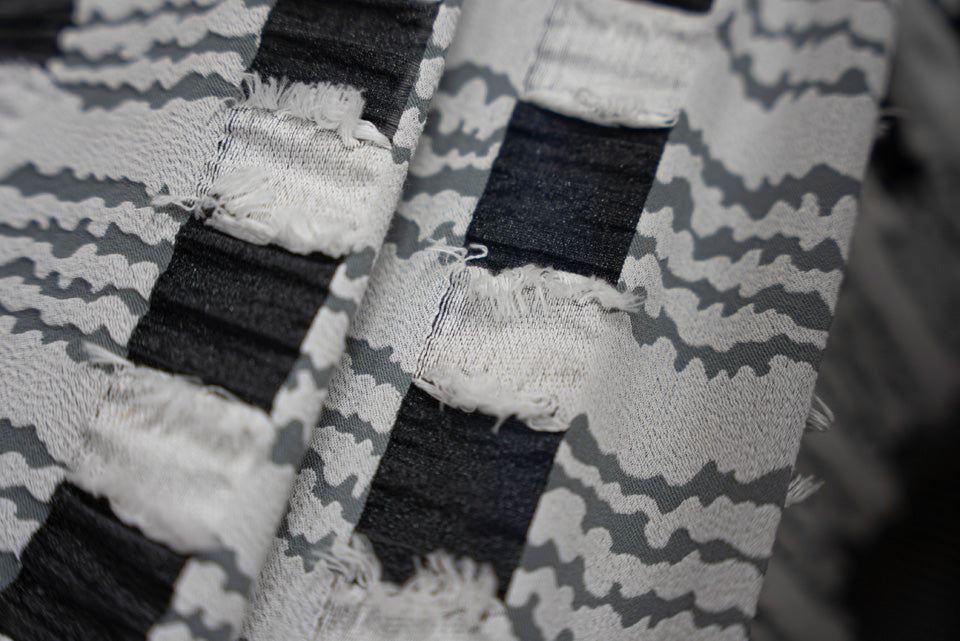
<Ordering original fabric>
[For corporate customers only] Would you like to create your own original jacquard fabric? We have a textile designer with specialized knowledge who will support you, so even if you are new to fabric making, you can place an order.
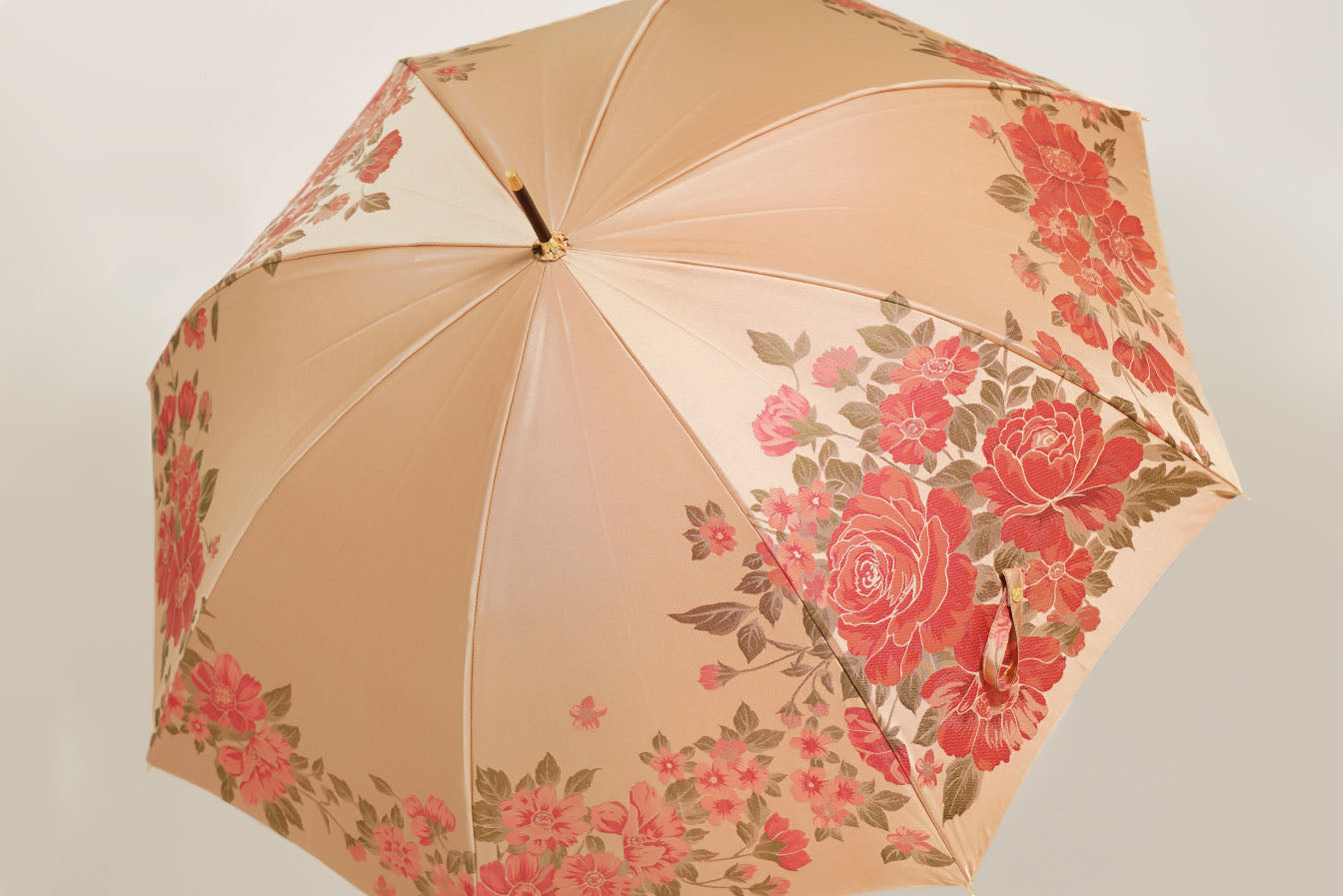
<Ordering an original umbrella>
[For corporate customers only] Would you like to create your own original umbrella? Makita Shoten is the only factory in Japan with an integrated production line from fabric to finished product.
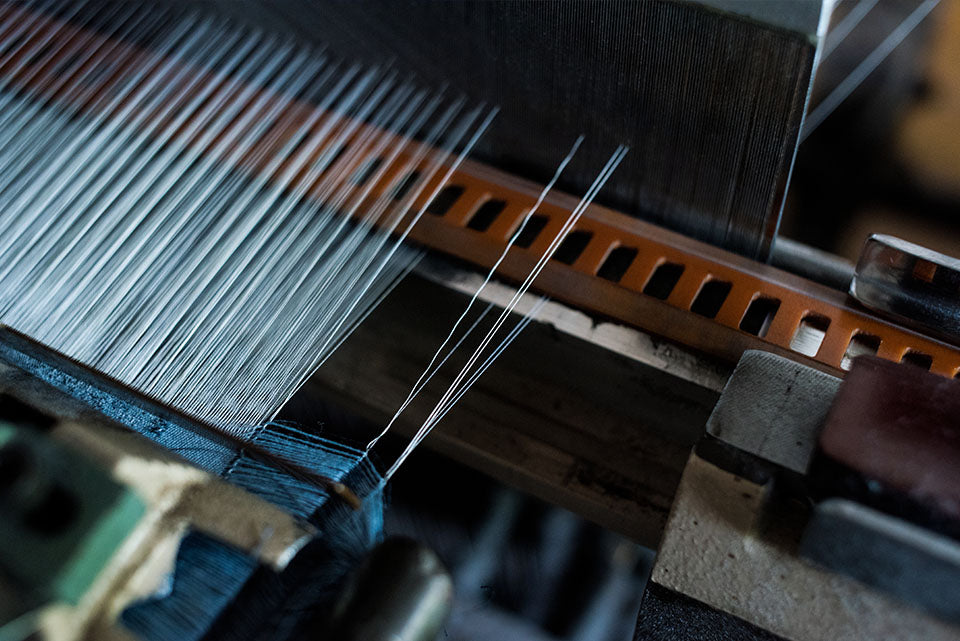
<Weaving umbrella fabric and clothing fabric>
There are six main steps that Makida Shoten goes through before their fabrics are finished, and each step is carried out by specialized craftsmen who have inherited the traditions of the ancient production area.