


Planning & Design team
planning design team
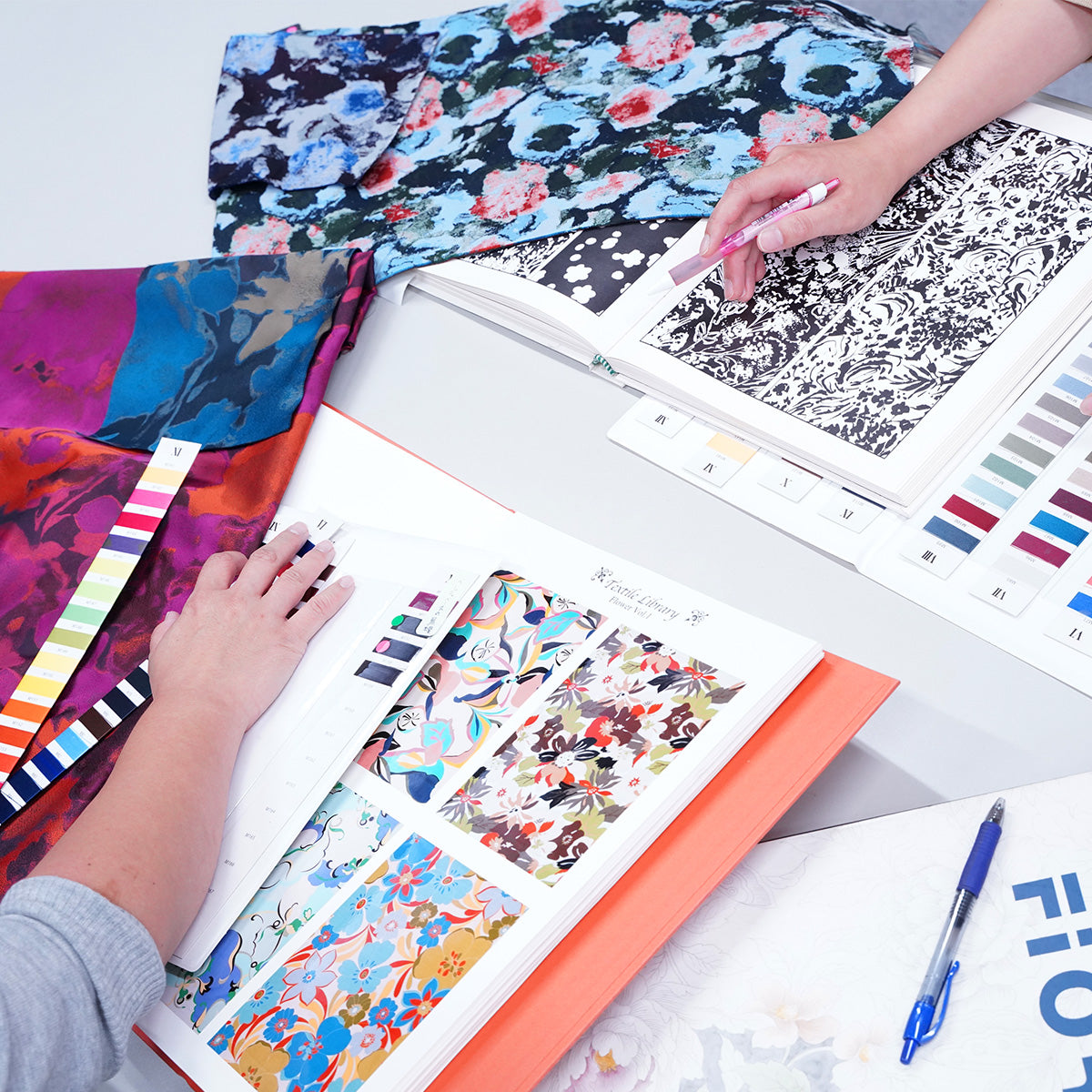
We are a team of fabric and fiber professionals who utilize the material knowledge we have cultivated over 150 years of history to turn our customers' ideas and requests into reality. Our resident textile designers will support you until the fabric is completed.
In addition, we also handle original fabrics and umbrella materials, as well as planning and designing for overseas exhibitions.
In addition to fabric planning and design, I am also responsible for a wide range of other tasks, including public relations using web content and social media.

The charm and fun of weaving learned through umbrella making
Interviewee: Rika Takiguchi
He was involved in the launch of the factory brand Makita Shoten , and is responsible for the textile design of the main products " Eori " and " Kirie ". He is also responsible for the design of umbrella and clothing fabrics, the operation of the official website and online shop, graphics for pamphlets, and information dissemination via social media. He studied graphic design at an art university and has been with Makita Shoten since 2011.
Q. What led you to become a textile designer at Makita Shoten?
I studied graphic design at an art university and was working in Tokyo when a designer from Makita Shoten saw my paintings hanging in my family's coffee shop and asked me if I wanted to come work for them. I later heard that he had praised the colors, composition and spacing of my work, and that was the trigger that led me to enter the world of textile design.
At first, I had only ever thought of pictures in two dimensions, so I couldn't imagine what it would be like to "paint a picture on an umbrella." I tried painting roses by fitting them into an octagon, and then gradually tried arranging the picture in a three-dimensional way. It was a process of trial and error. Furthermore, I repeatedly rearranged the layout of the picture in order to position it as a link in the umbrella within the woven fabric that would be woven to the width of the fabric. Everything was a first for me, and when I sewed the woven fabric, I found there was a gap between the world view on the screen and the actual woven fabric, so I was involved in the development of "Eori" while doing countless test weavings. Because the knowledge required to paint a picture and to make textiles are completely different, I was completely confused at first (laughs).


Q. What are the challenges of designing textiles?
When it comes to weaving, it's often difficult to notice flaws in the weave design until you actually weave it. For example, if you're using a five-ply satin weave, you need to design it in multiples of 15, but at first, I didn't even understand what my senior colleagues were saying. Woven fabrics are like bitmaps, so there's no room for manipulation, and when you actually pour the weave into the fabric, unnatural "flaws" (phenomenon in which streaks or skipped threads appear in the fabric) sometimes appear. Not understanding why the flaws were appearing, I asked my senior colleagues, and they would tell me, "Try changing this weave like this," and doing so would fix the problem, but it took me five years to logically understand why the flaws were appearing.


Q. Can you tell us about an umbrella that you have a special attachment to?
It has to be the first series I made, the Eori series . I started out wanting to make umbrellas with flowers of the four seasons, but because umbrellas must not leak, there are restrictions on the types of weave that can be used, and designing the fabric within those restrictions is an extremely difficult task.
For example, " Sunflowers " is made using three strands (three colored threads): yellow, green, and brown, but my senior asked me to try making it by dividing the weave into 13 different types, so it was very difficult as I had to design it while understanding the structure of how woven fabric is made. However, as I was making it, an image of creating a three-dimensional effect in the picture began to emerge, and little by little I began to grasp the feeling of turning a picture I had drawn into weaving rather than just "the act of drawing a picture."
After repeated test weaving, we watched our sewing craftsmen cutting and sewing the fabric into umbrellas, and carefully adjusted the layout of the seams between the umbrella links to create a beautiful umbrella design.


Q. Please tell us if you have a favorite umbrella.
When the lily design was made into a finished product, I was impressed by the beauty of the black umbrella. The deep jet black that is unique to yarn-dyed fabrics, the sheen that appears as it reflects light, and the subtle nuances that appear sparkling depending on the direction of the weave make it very elegant. I also designed a monochrome floral pattern that is unique to yarn-dyed fabrics, and this is also a very beautiful umbrella, so I would love for you to see it in person.


Q. Please tell us about the work you have been doing at Makita Shoten recently.
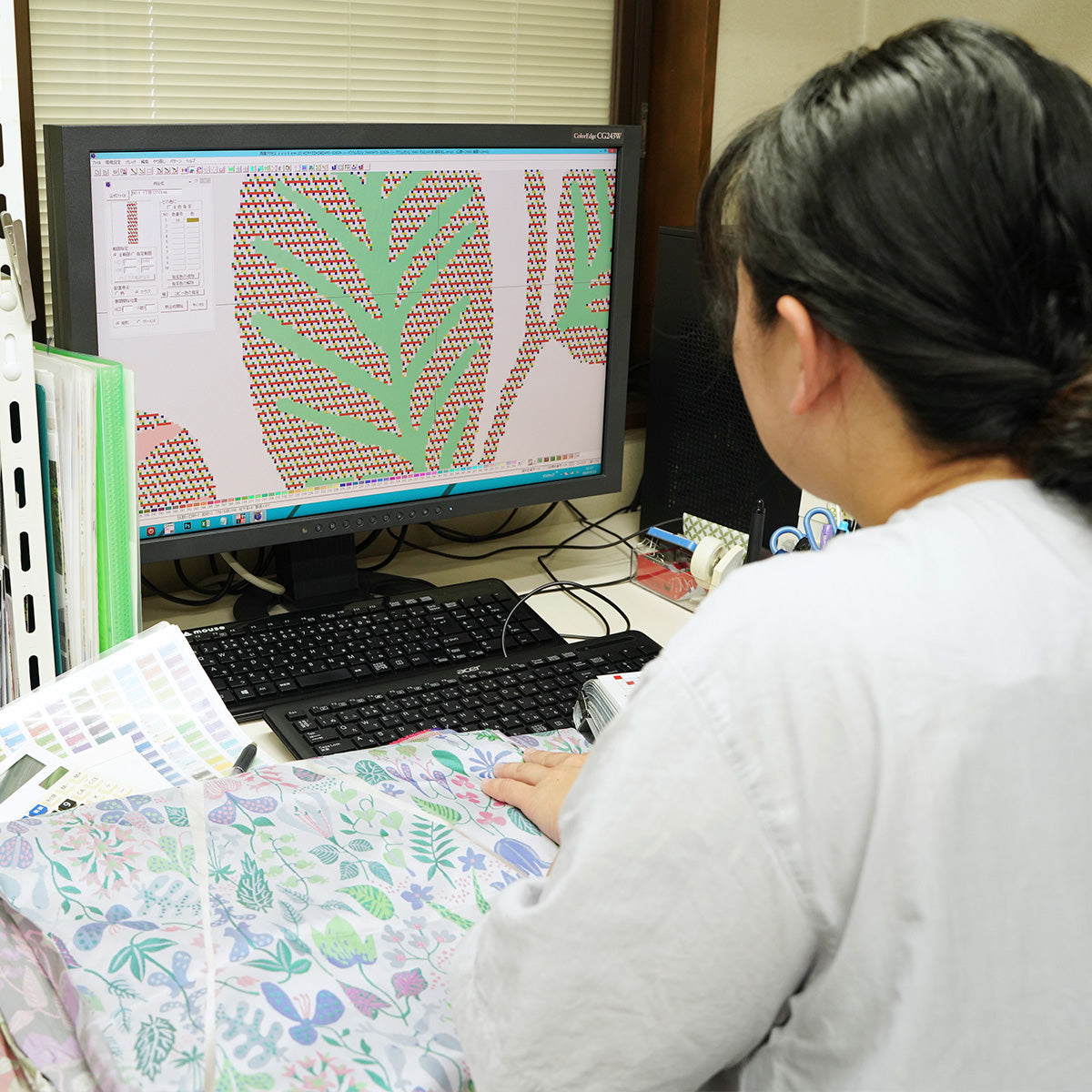
While I also do textile design for umbrellas and clothing, I am also involved in a wide range of work, from running our own website and online shop, creating images for columns, promotional materials, handling exhibitions, photography, video production, and creating pamphlets and graphic designs. I also post weekly on Instagram for our textile account. For textile design, we use specialized software called GABO to create the structure, but for graphic design such as pamphlets and direct mail, we use specialized software such as Illustrator and Photoshop, so I use two computers for both, and I have two computers side by side on my desk (laughs).


Q. What is fun and comfortable about working at Makita Shoten?
It's fun to always have new challenges. I'm the type of person who gets tired when I have free time, so being busy suits me. The company has an environment that makes it easy to work even while raising children, and some tasks can be done remotely. Everyone around me provided solid support during my maternity leave, so I was able to take a full year of maternity leave when my second child was born. Everyone around me also provided solid support, so I was able to return to work with peace of mind.
Although it is still in the testing phase, it seems they are introducing a shift work system, which is helpful as it allows me to adjust my working hours according to the developmental stage of my children. I used to work overtime, but with the work style reform, I no longer do so, and I am also given compensatory days off after exhibiting at events, so I appreciate the flexible working style. I really feel that this is a workplace where it is easy for women to work.


Q. What are your future goals and prospects?
I feel that video is essential to conveying the appeal of textiles. It's difficult to convey the unique luster of yarn-dyed textiles, or the three-dimensional effect and shadows that can only be created with woven fabrics, through still images. Videos are much easier to understand, showing how to use the ball fasteners on high-end umbrellas, or how to fold a folding umbrella. We've also had more young staff members, so I'd like to work together with everyone to create a system that allows us to work as a team and continue to create a brand that can better communicate its appeal.


Other articles
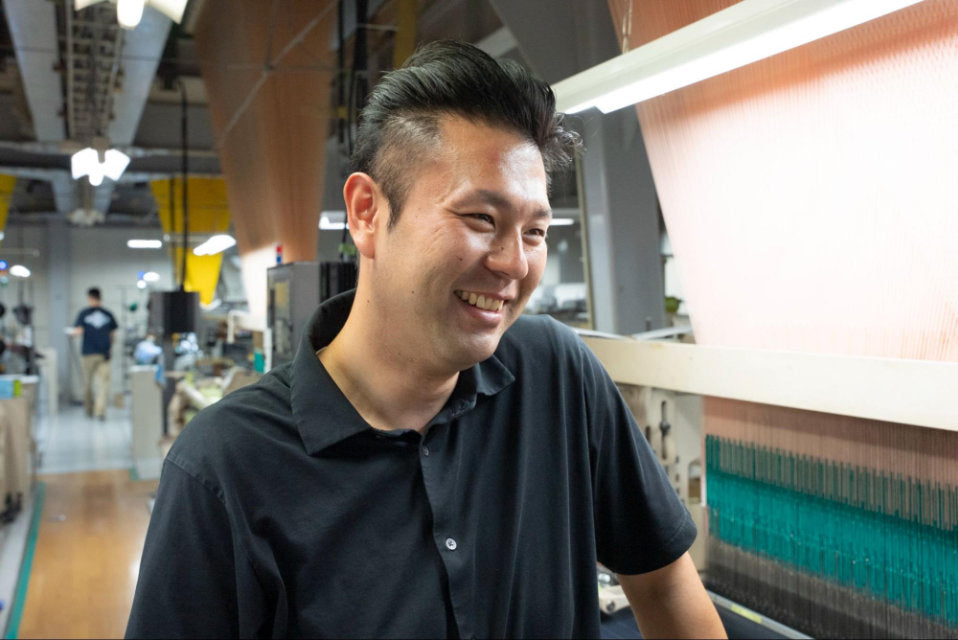
Fujie: Connecting the vision of textile artisans and brands to create something
>Read the article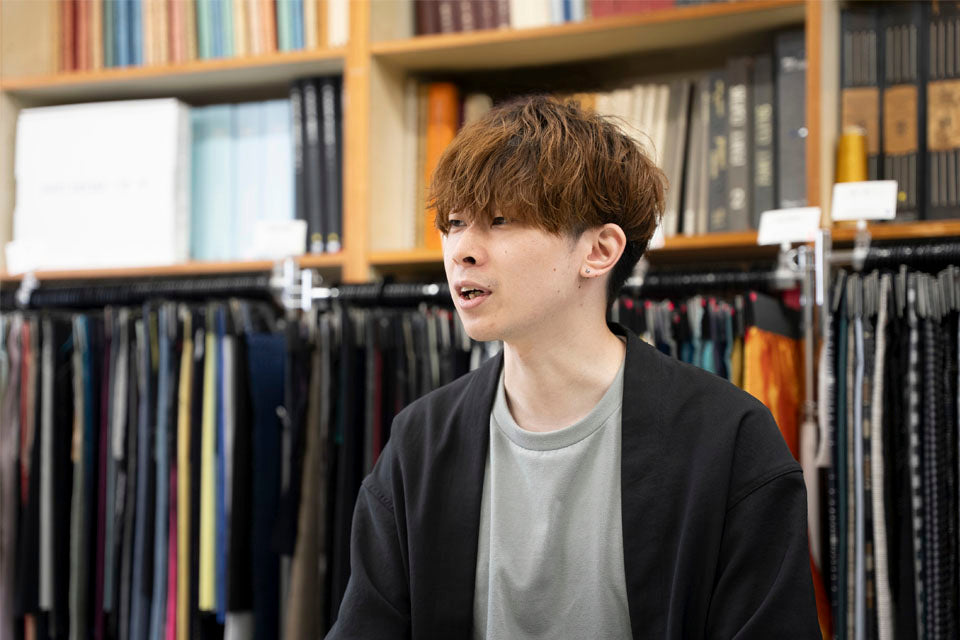
The bridge between craftsmen and customers: Tomoki Kurihara
>Read the article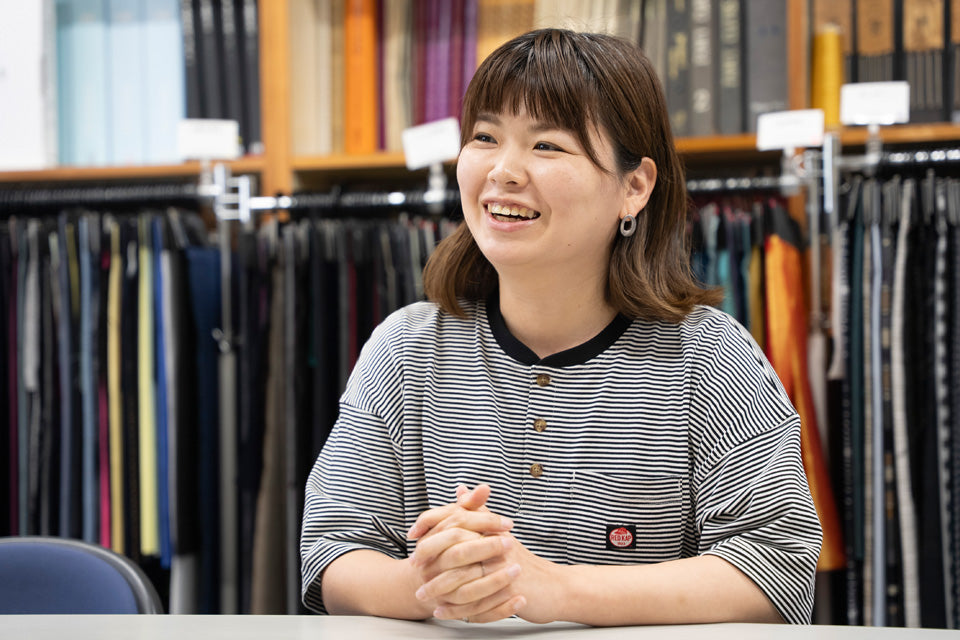
The work and thoughts of a textile designer who weaves in a sense
>Read the article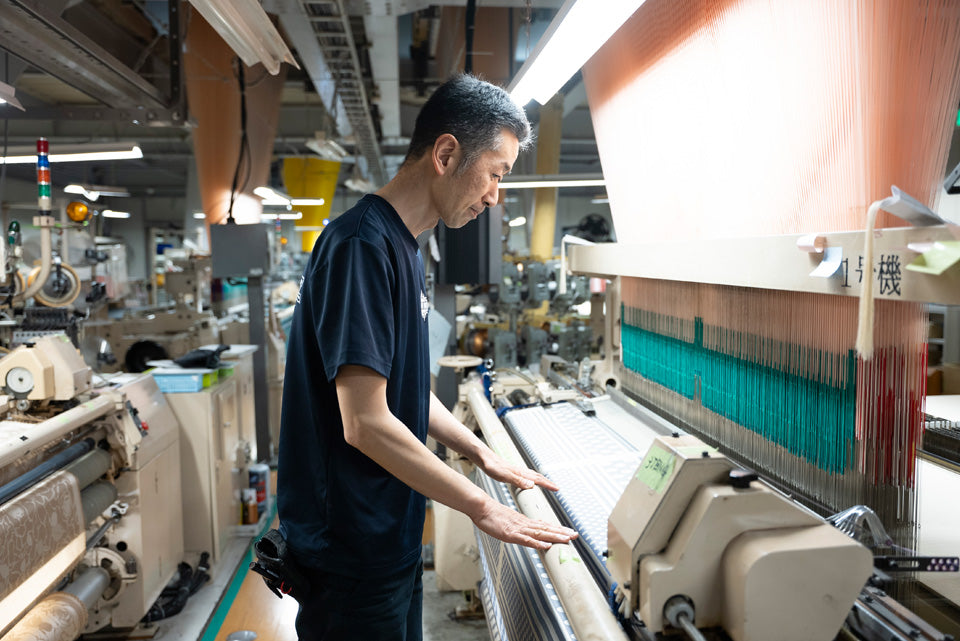
Daily conversations with the loom: Tatsuya Omata
>Read the article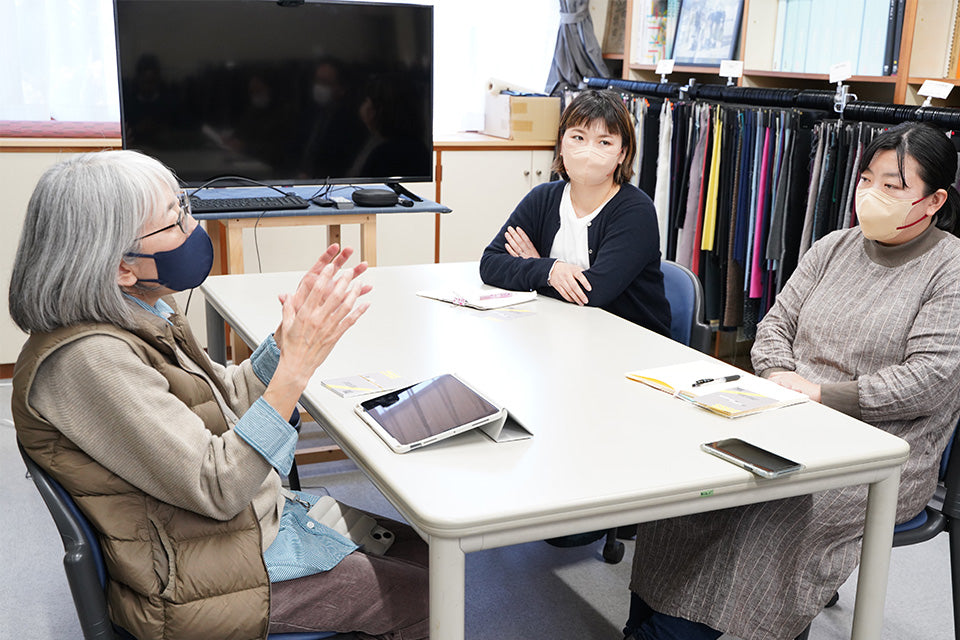
Makita Shoten's textiles evolve into a new era
>Read the article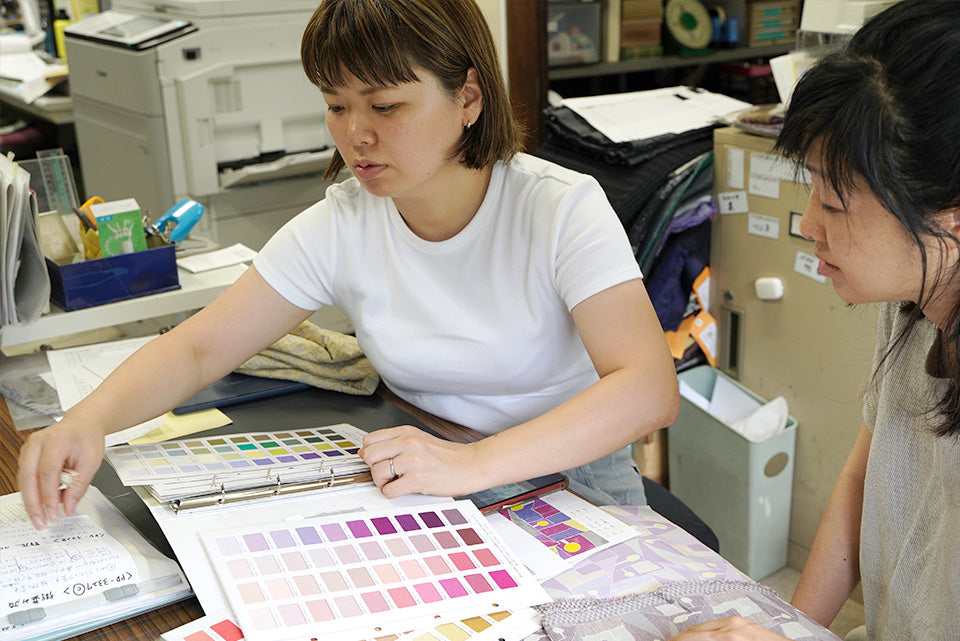
What are Makita Shoten's textile designers?
>Read the article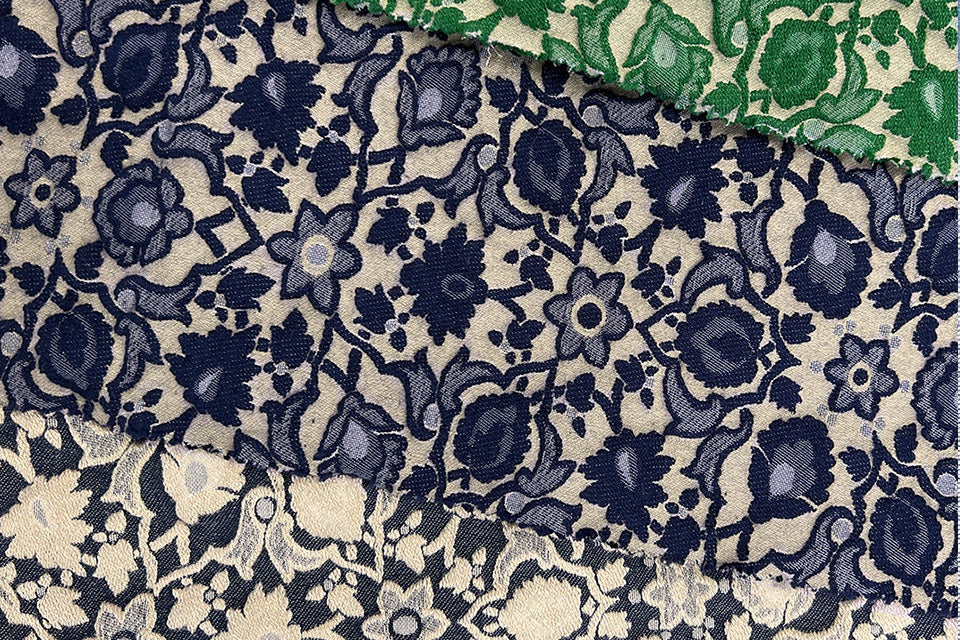
<Ordering original fabric>
[For corporate customers only] Would you like to create your own original jacquard fabric? We have a textile designer with specialized knowledge who will support you, so even if you are new to fabric making, you can place an order.
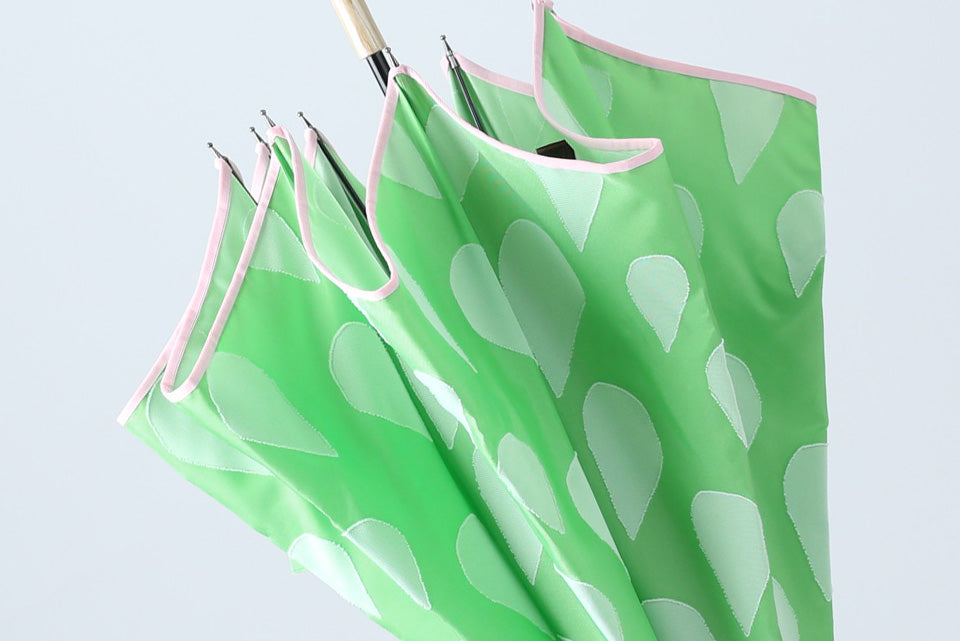
<Ordering an original umbrella>
[For corporate customers only] Would you like to create your own original umbrella? Makita Shoten is the only factory in Japan with an integrated production line from fabric to finished product.
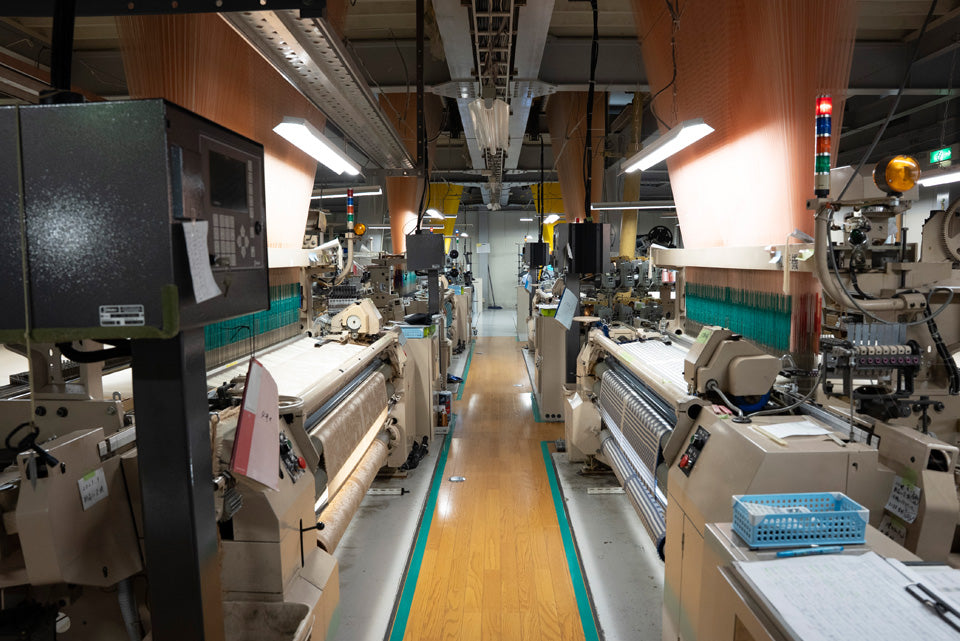
<Weaving umbrella fabric and clothing fabric>
There are six main steps that Makida Shoten goes through before their fabrics are finished, and each step is carried out by specialized craftsmen who have inherited the traditions of the ancient production area.