

Planning & Design team
planning design team
We are a team of fabric and fiber professionals who utilize the material knowledge we have cultivated over 150 years of history to turn our customers' ideas and requests into reality. Our resident textile designers will support you until the fabric is completed.
In addition, we also handle original fabrics and umbrella materials, as well as planning and designing for overseas exhibitions.
In addition to fabric planning and design, I am also responsible for a wide range of other tasks, including public relations using web content and social media.
What are Makita Shoten's textile designers?
Inoue specialized in textile design at an art university in Tokyo.
As someone who specializes in unique textile designs, we asked her how she designs and weaves the textiles that her customers imagine.
Like a textile engineer
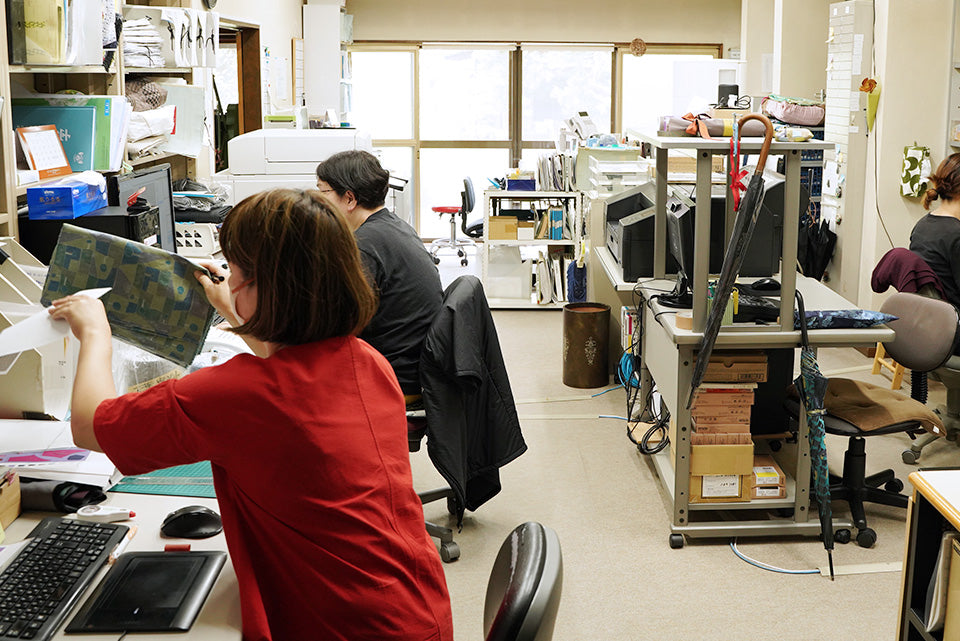
The Planning Department, where I work, is primarily responsible for textile design. When you think of a textile designer, you might imagine someone who draws original textile patterns, but we work more like architects, giving shape to the textiles our customers want to create. Makita Shoten is a textile factory, so we first ask customers what kind of textile they want to use, and then decide on the texture and materials. There are many different types of thread, from natural to synthetic fibers, and the texture and image of the fabric can change dramatically depending on how the thread is used, the pattern, the weave, and the weave method (weaving method). The combinations are endless, so there are many things you won't know until you try them each time.
Communication skills to share ideas
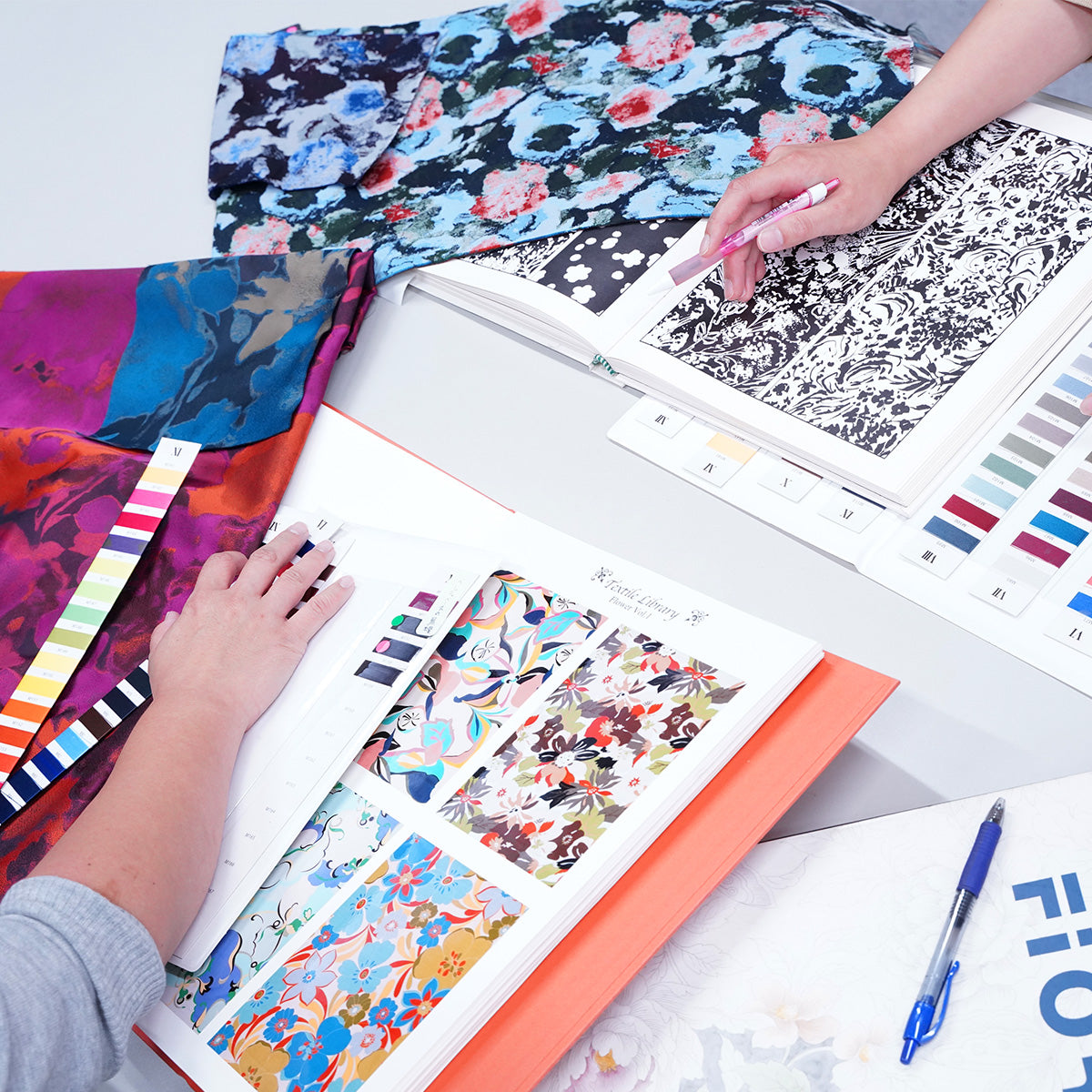
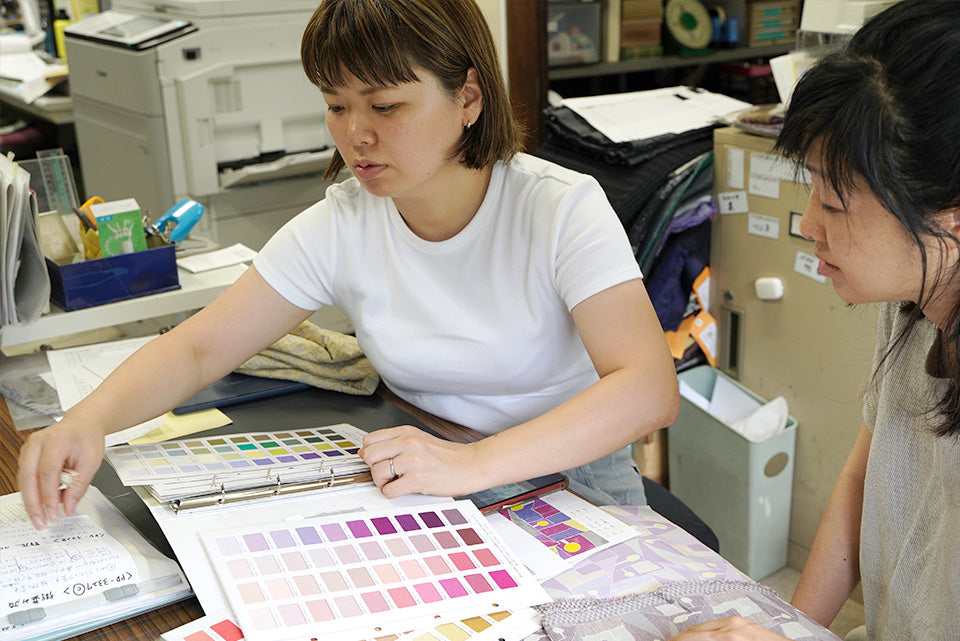
For customers with a desired pattern, we invite them to explore the archives of textiles woven by Makita Shoten to help them visualize the feel they want to create. For example, they may want a flat base color or a bumpy pattern. By touching the fabric and listening to their opinions, we solidify the design image for the textile. If the customer lives far away and cannot visit our office, we sometimes share our vision through online meetings, looking at patterns sent via email. We then select several textiles that seem to fit the desired feel and send swatches to help them get a feel for the fabrics we can weave at Makita Shoten. We may also invite customers to view Makita Shoten's original patterns on Instagram and create their own original textiles by changing the color, thread, and weave.
The necessary preparations for weaving are carried out meticulously.
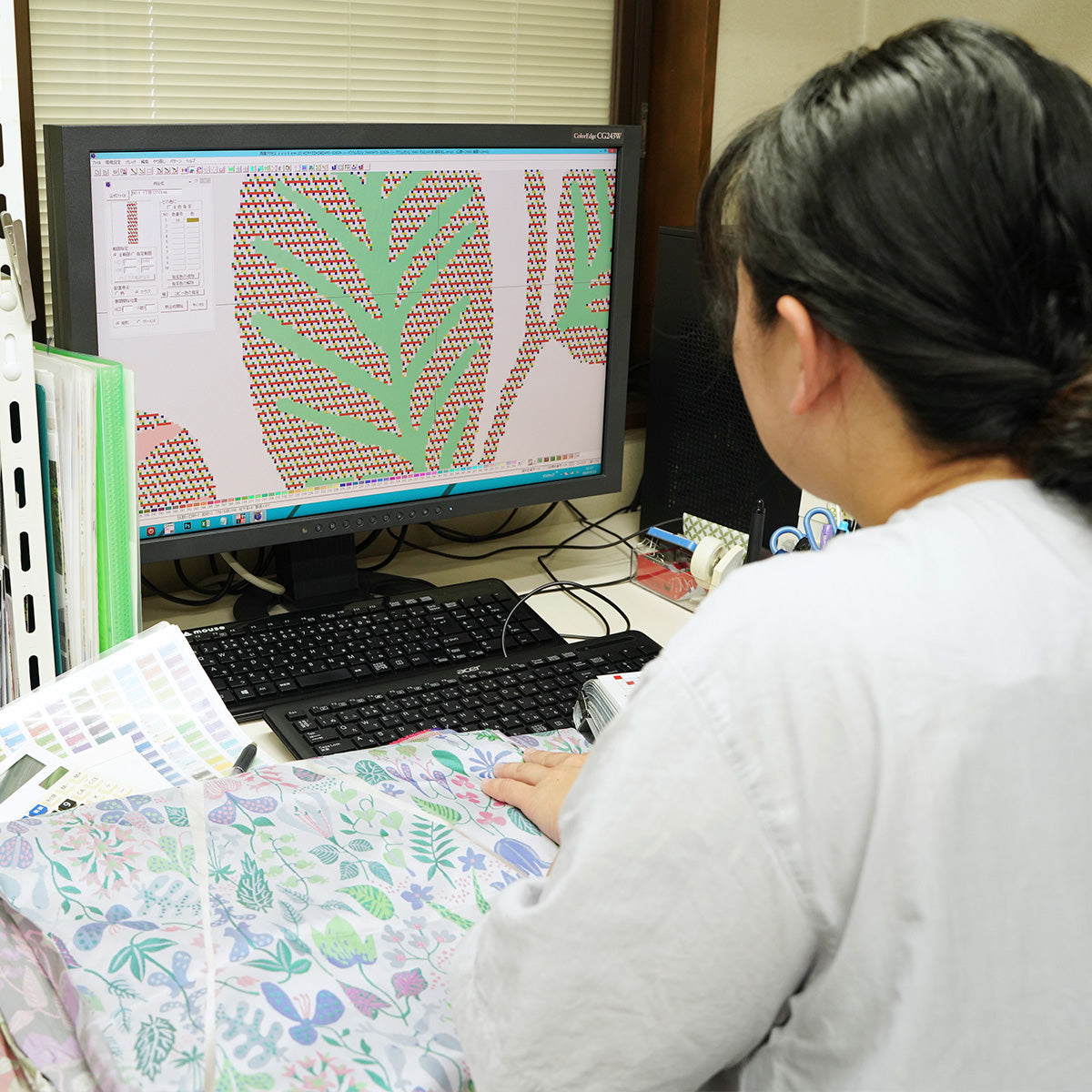
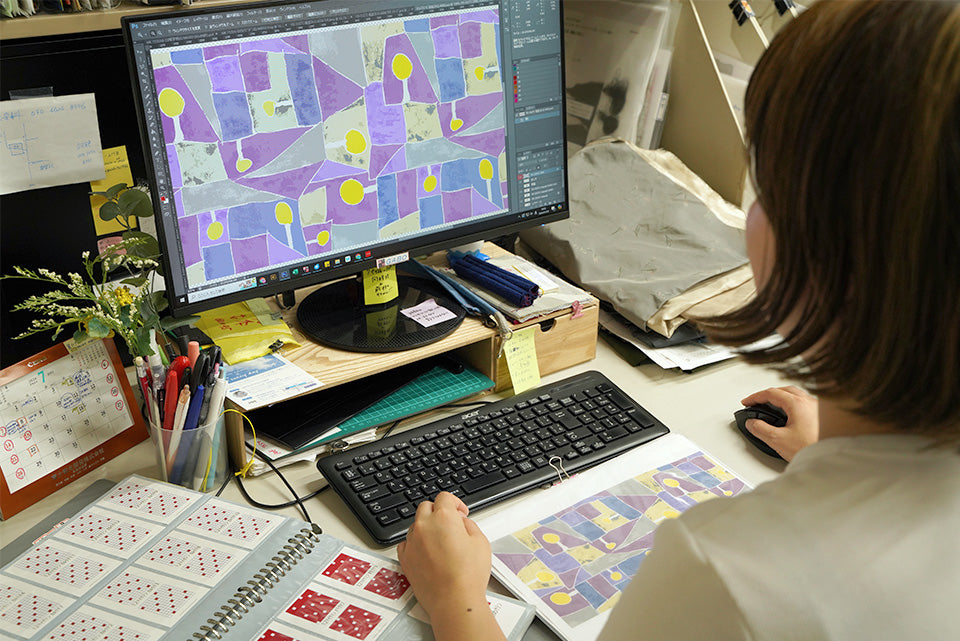
Once the plan is finalized, we begin designing the weave. While this may not be familiar to most people, the design progresses by filling in grids like a bitmap. While fabrics are typically designed using only warp and weft threads, the combination of these threads determines the color and texture, so the data is created on a computer screen. Getting the weave wrong can result in a fabric that isn't what we envisioned, so we proceed with caution. Once the customer's order is finalized, we begin preparing the threads. If there are pre-prepared warp threads, the process goes smoothly. However, if there aren't, a fabric preparation step, called warping (pulling the required number of warp threads to the same length), is required. Furthermore, if the color needs to be changed, a dyer will need to dye it. Changing the dyed thread, such as cotton, cupra, or polyester, will change the color of the finished thread, so a sense of color is also necessary.
Fabric sample creation
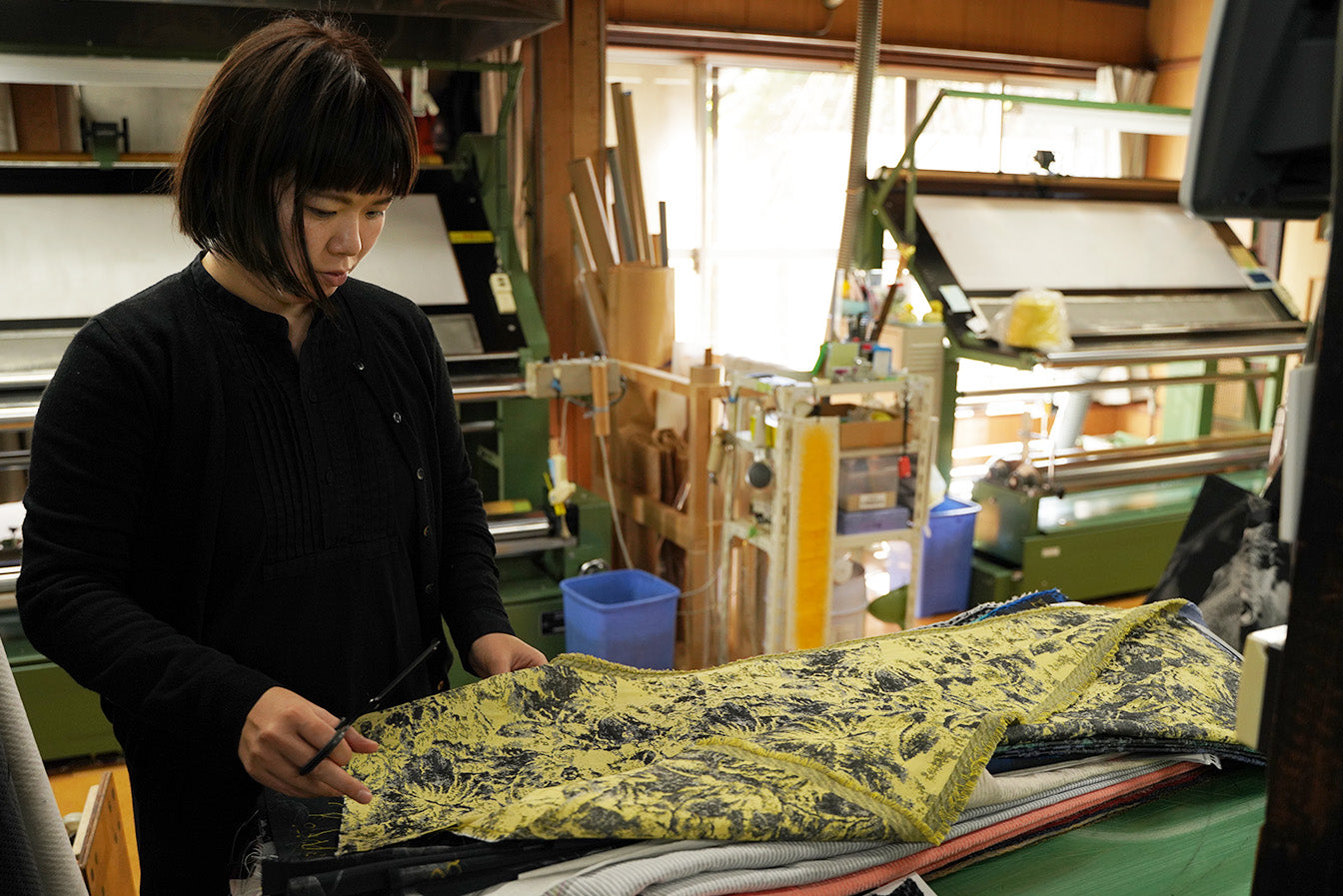
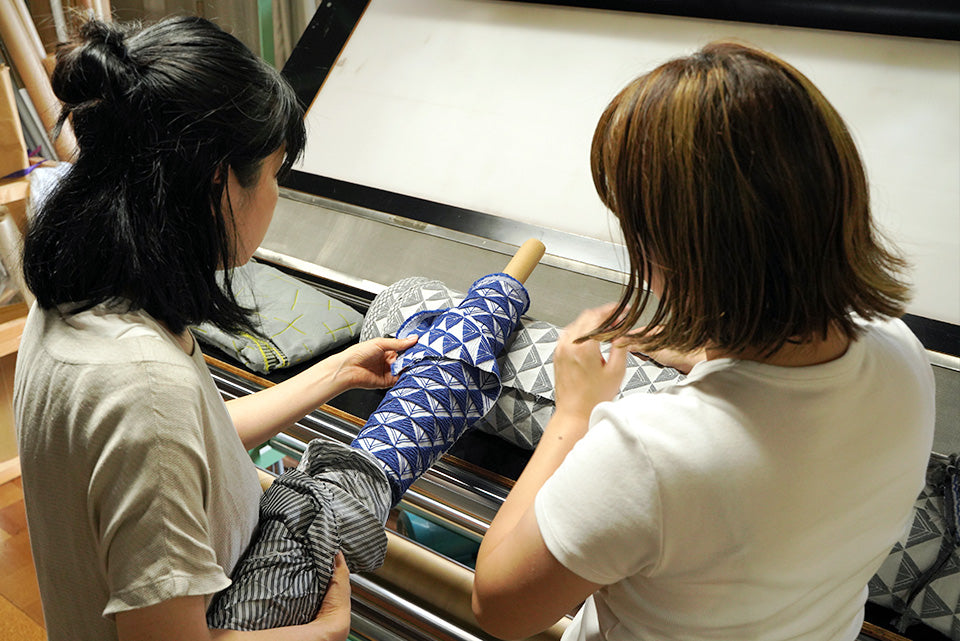
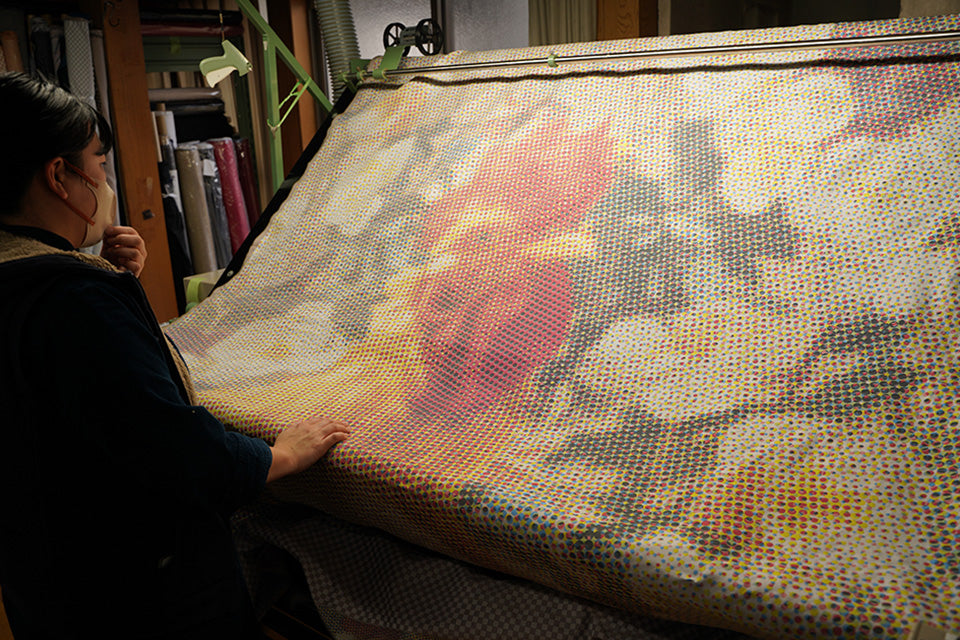
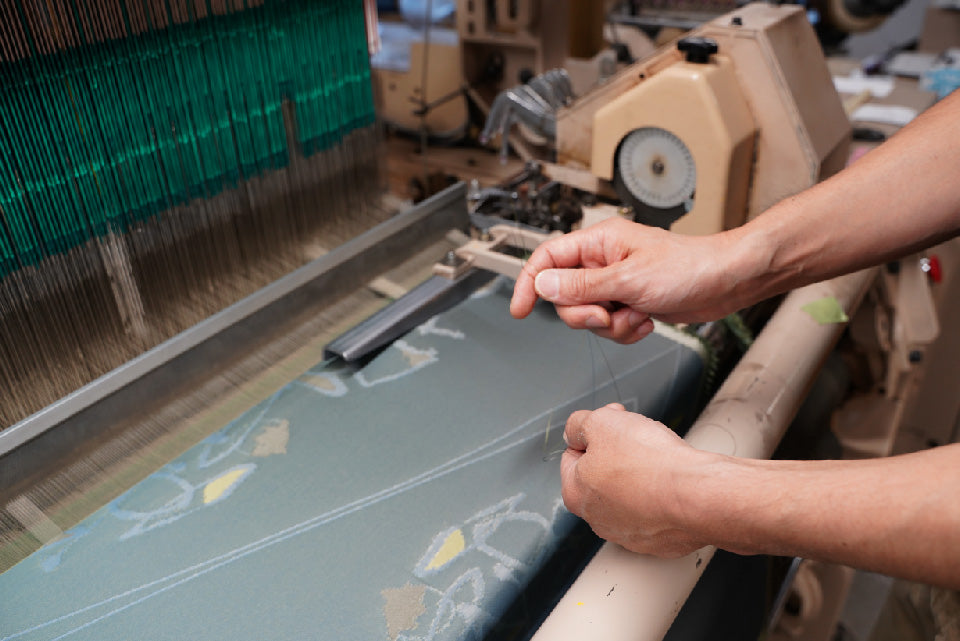
The fabric data created on a computer is read into a Jacquard loom, and a test weave of anywhere from a few dozen centimeters to one meter is made. The test weave is then checked by the customer, and if it's OK, the garment is woven. While weaving can be done in as few meters as necessary, we recommend weaving at least 10 meters, as weaving a small amount can cause the grain to become distorted and the fabric to become unstable. Since post-processing is often performed, the minimum length that can be processed at the post-processing factory must be woven. Various post-processing techniques are available for clothing fabrics, including brushing, shrinking, and weft cutting, while umbrella fabrics include water-repellent and UV treatments. These processes can dramatically change the appearance and function of a textile, so textile designers need both knowledge and experience.
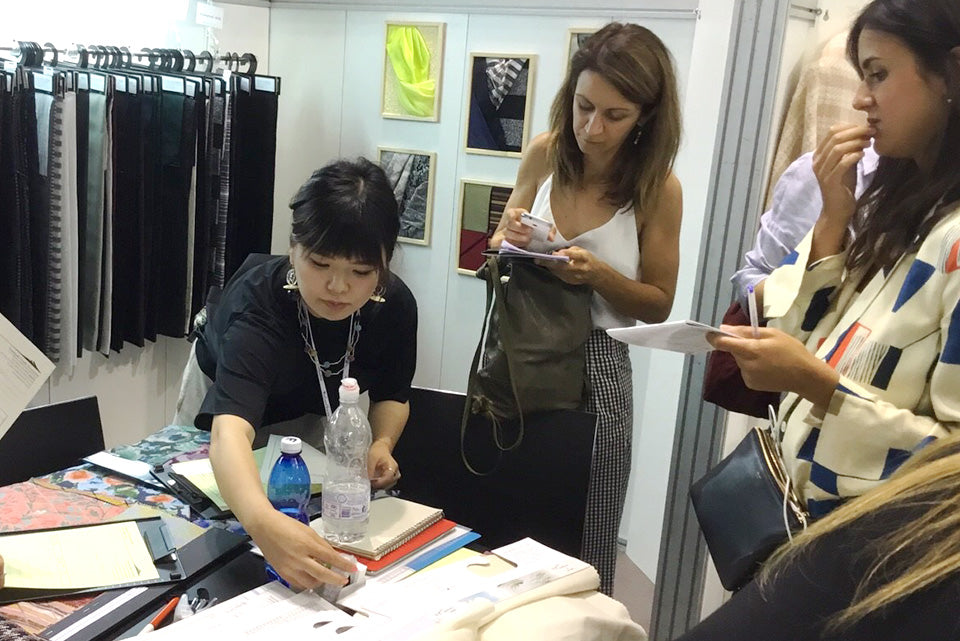
An important exhibition for people to experience textiles
Recently, I've been meeting more and more customers at fabric exhibitions such as PTJ (Premium Textile Japan) and FABRICa NIPPON . Talking to customers directly and letting them touch Makita Shoten's textiles helps to create lively conversations. I also find it important to visit clothing exhibitions to understand what kind of clothing the textiles we make have been made into. The way the textile drapes can create a very different look, from a dressy atmosphere to a feminine image, so I've recently been uploading videos to Instagram of textiles wrapped around a torso to help designers visualize the textiles more easily. I hope you'll take a look.
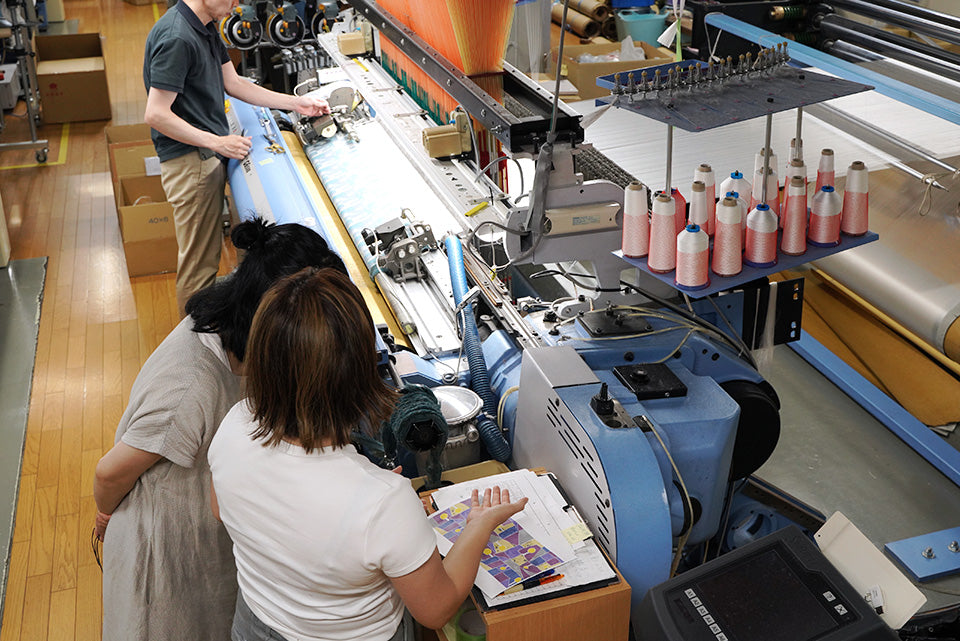
Textile designers are involved in everything from planning to production
Another important part of my job is adjusting schedules while checking customer delivery dates. Because weaving involves many preparatory steps, I need to coordinate closely with the artisans. I check the weft order status while keeping track of the warp threads on the loom. While recent difficulties in obtaining yarn due to COVID-19 and the global situation have continued, I work closely with the Planning Department to build a support system that allows us to create attractive textiles. Makita Shoten has a large jacquard loom that can weave fabrics up to approximately 1800mm wide, allowing us to weave very bold patterns. Designers interested in creating textiles are welcome to contact us.
Other articles
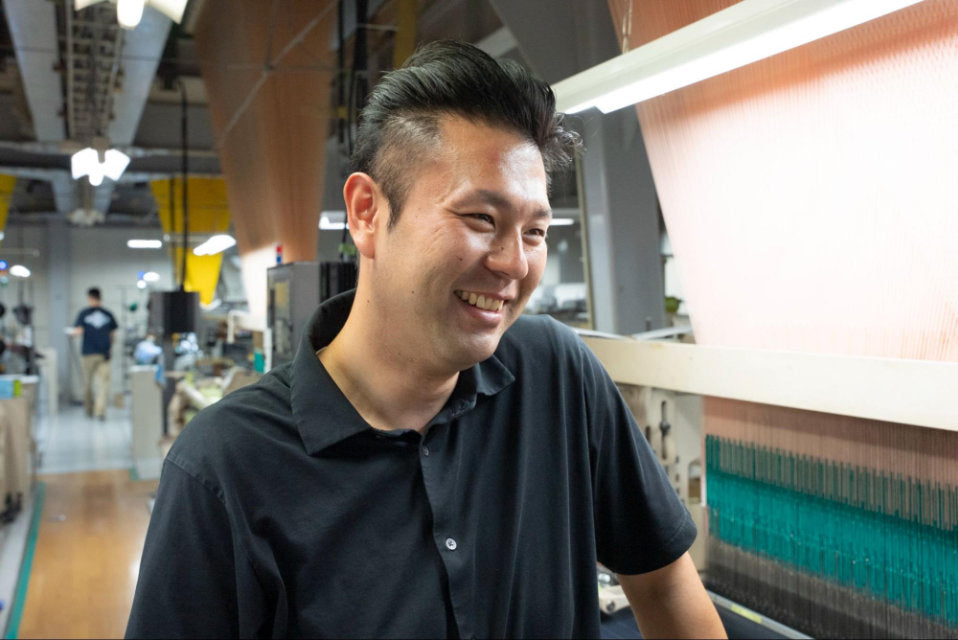
We value being a shop. We want to create a future where Makita fabrics are abundant in our lives.
>Read the article
The charm and fun of weaving learned through umbrella making: Rika Takiguchi
>Read the article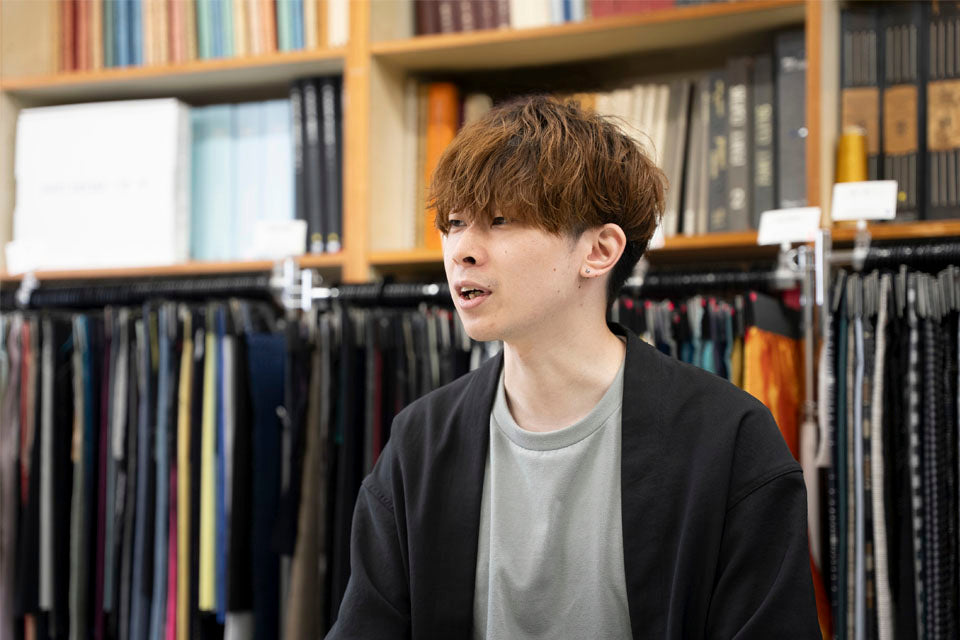
The bridge between craftsmen and customers: Tomoki Kurihara
>Read the article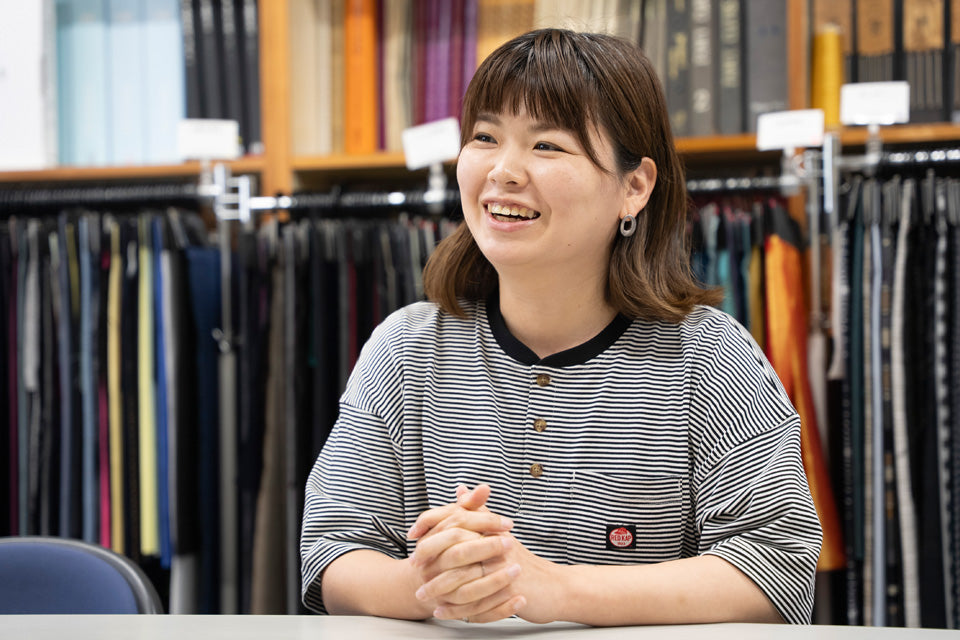
The work and thoughts of a textile designer who weaves senses: Misato Inoue
>Read the article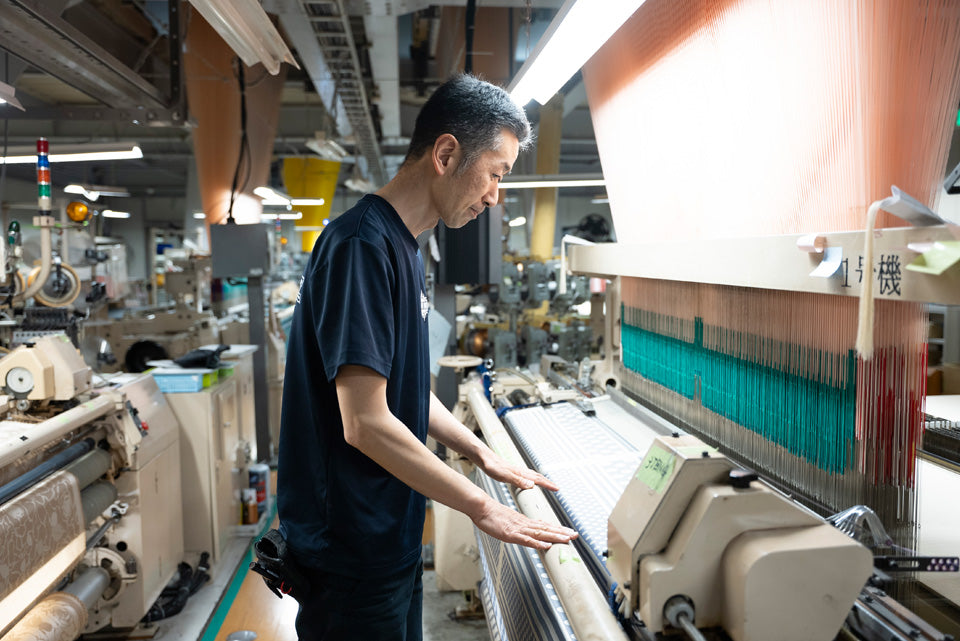
Daily conversations with the loom: Tatsuya Omata
>Read the article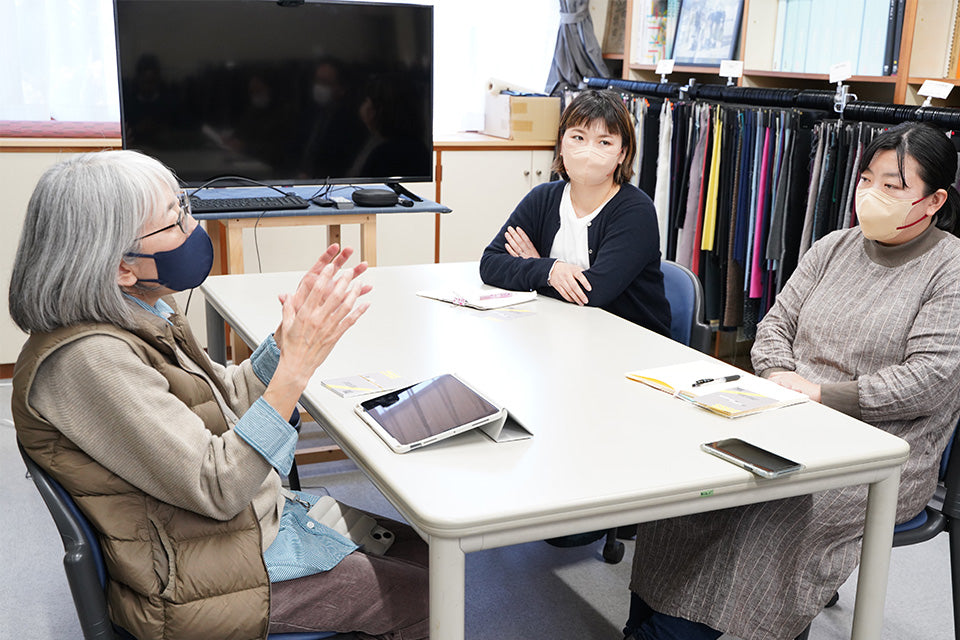
Makita Shoten's textiles evolve into a new era
<Ordering original fabric>
[For corporate customers only] Would you like to create your own original jacquard fabric? We have a textile designer with specialized knowledge who will support you, so even if you are new to fabric making, you can place an order.
<Ordering an original umbrella>
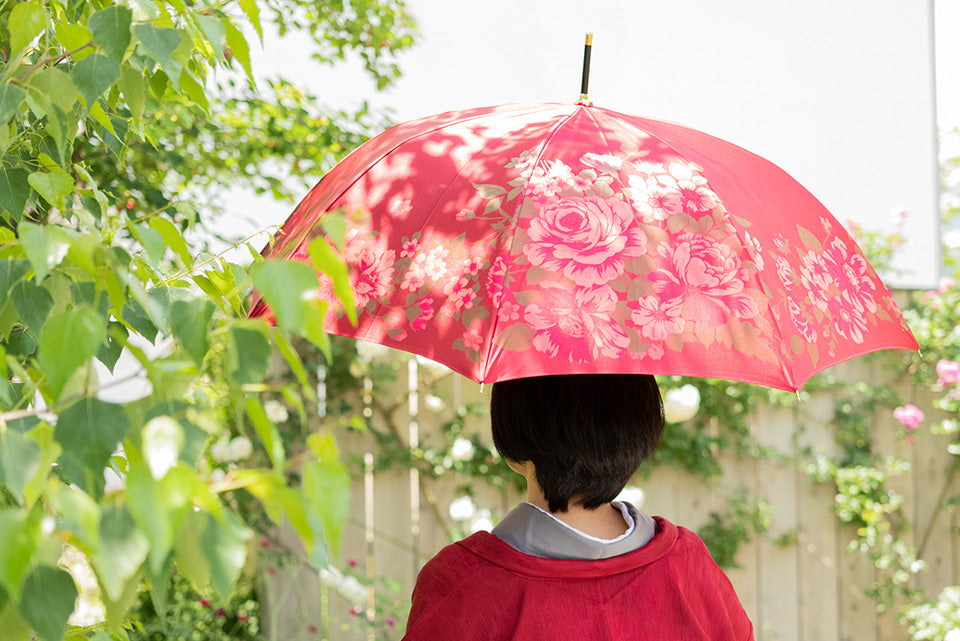
[For corporate customers only] Would you like to create your own original umbrella? Makita Shoten is the only factory in Japan with an integrated production line from fabric to finished product.
<Weaving umbrella fabric and clothing fabric>
There are six main steps that Makida Shoten goes through before their fabrics are finished, and each step is carried out by specialized craftsmen who have inherited the traditions of the ancient production area.