


Planning & Design team
planning design team
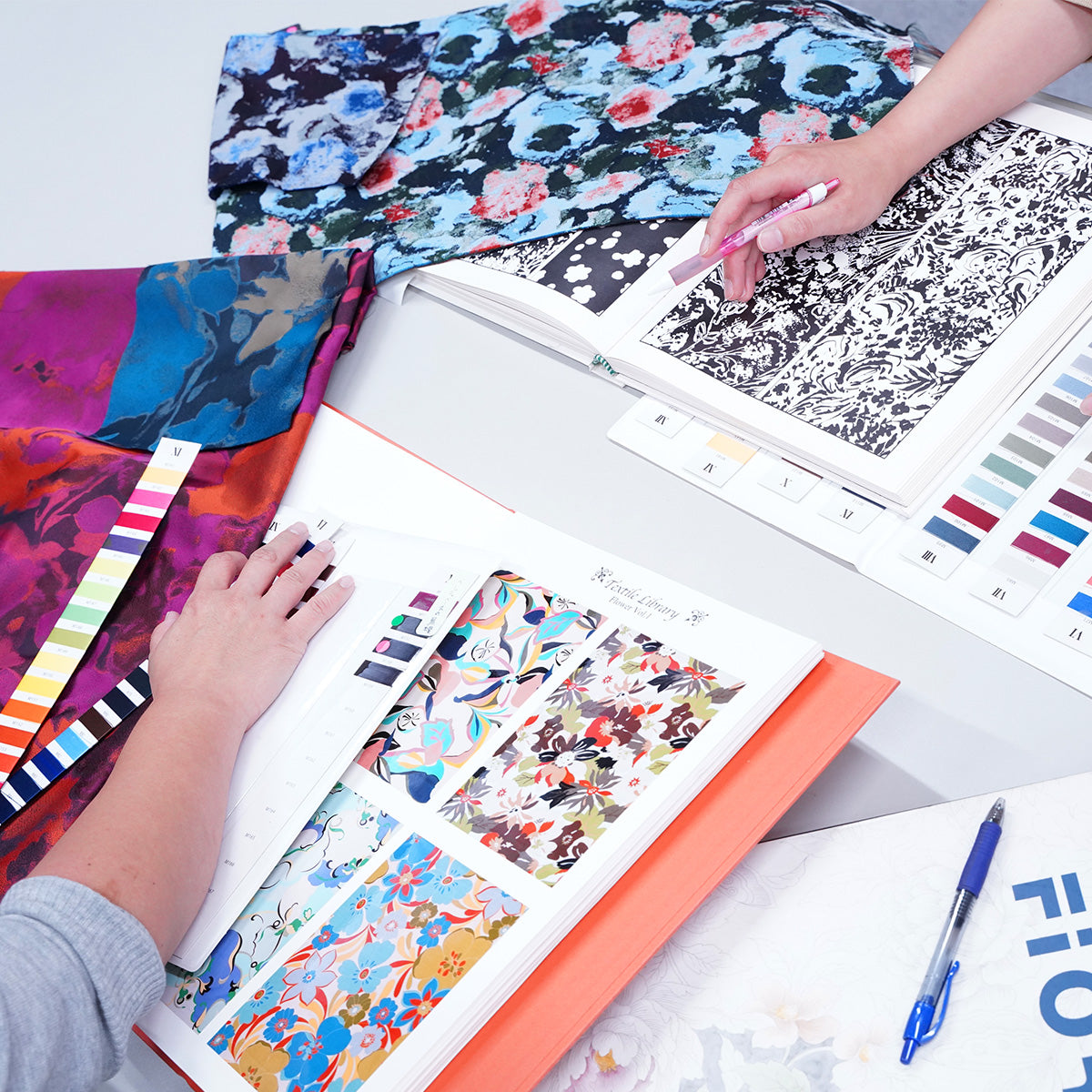
We are a team of fabric and fiber professionals who utilize the material knowledge we have cultivated over 150 years of history to turn our customers' ideas and requests into reality. Our resident textile designers will support you until the fabric is completed.
In addition, we also handle original fabrics and umbrella materials, as well as planning and designing for overseas exhibitions.
In addition to fabric planning and design, I am also responsible for a wide range of other tasks, including public relations using web content and social media.
The work and thoughts of a textile designer who weaves in a sense
Interviewee: Misato Inoue
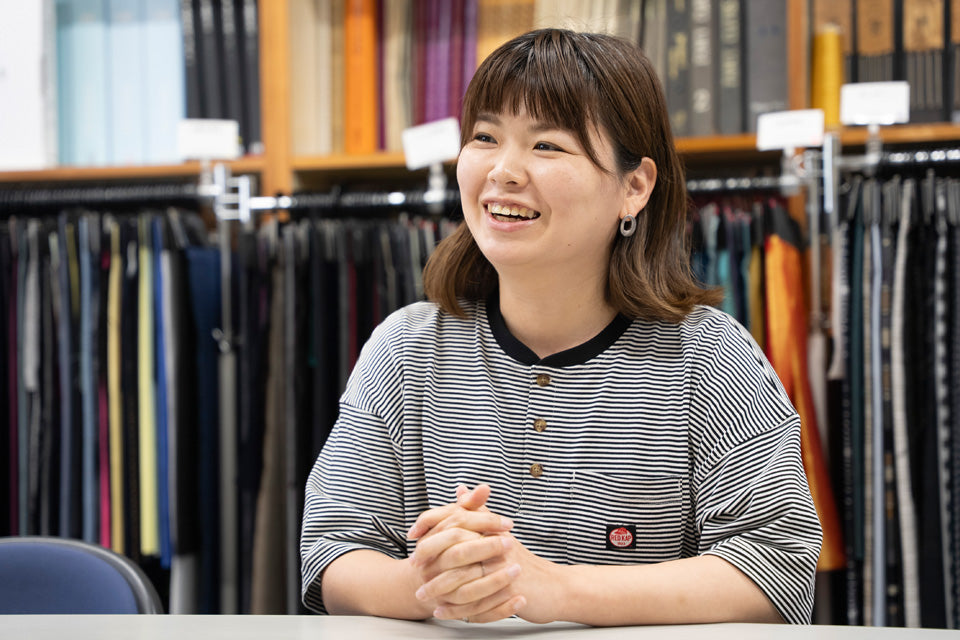
Misato Inoue is involved in a wide range of work, from designing original textiles to weaving trials and selecting materials, focusing on textile designs for customers, and even exhibiting at exhibitions.
We strive to create fabrics that value "sense" while communicating directly with our customers.
Q. Please tell us about your daily work.
I am mainly in charge of textile design. I communicate directly with customers to find out what the fabric will be used for, such as a jacket, shirt, pants, interior decoration, or umbrella, and then I design by considering the best material and structure for its performance and texture.
A distinctive feature of Makita Shoten is that our designers work without any sales involvement, which makes it easier to fine-tune the nuances of a particular design, but it also requires knowledge and adaptability regarding materials and processes.We make multifaceted judgments, including the type and thickness of thread, the number of stitches per thread, and the weave structure, to arrive at the best textile.

Q. How do you turn your client's requests into reality?
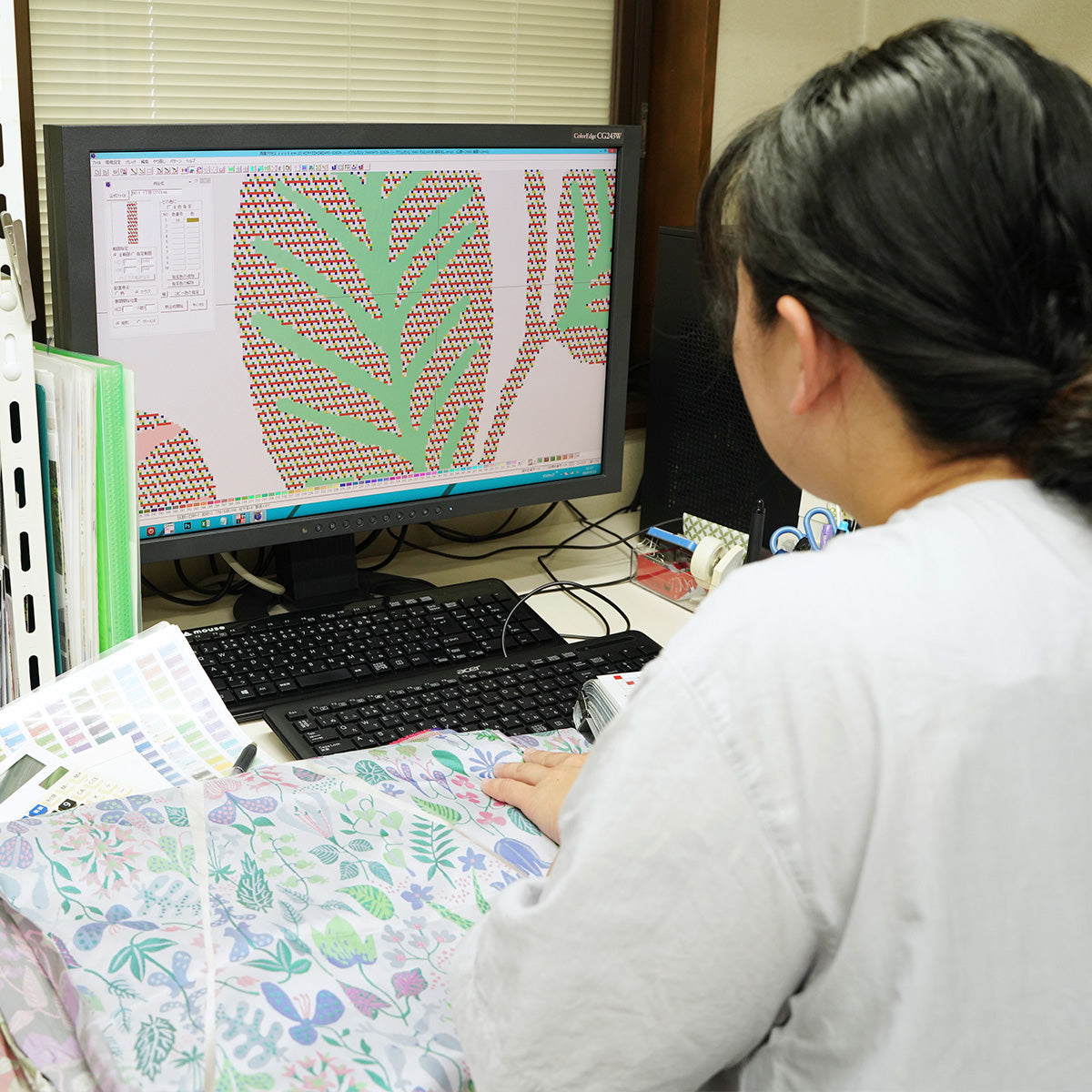
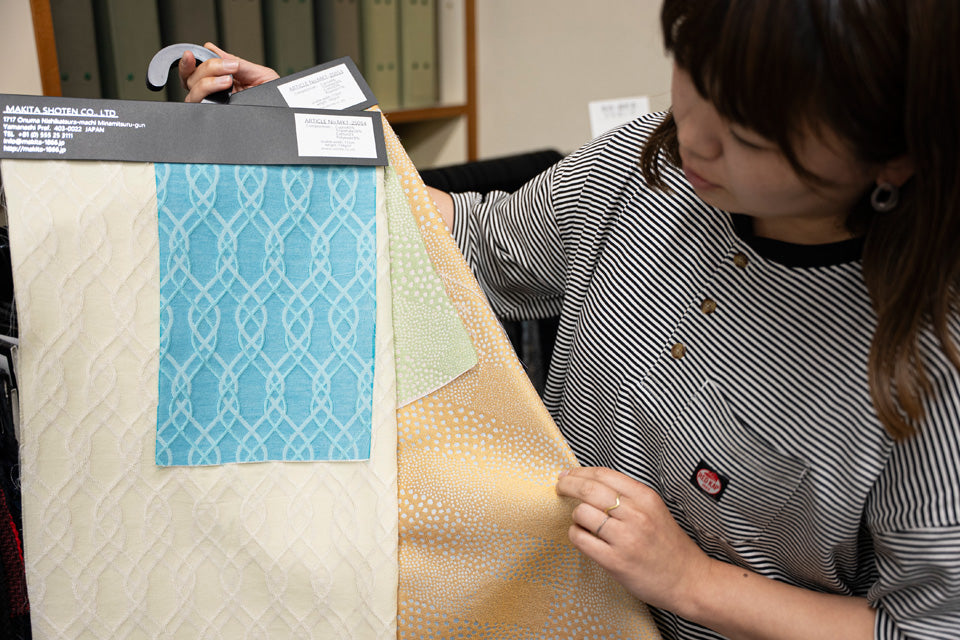
Based on the design data we receive, we conduct test weaving while imagining the scale of the pattern and how the thread colors will look when made into clothing. The same design can look very different depending on the properties of the thread and the weave, so we make repeated adjustments.
Sometimes the finished product is different from what I imagined, but sometimes it exceeds my imagination in a good way. The process of revising the structure and thread composition to bring out the desired look is difficult, but it is the most enjoyable part of the process.
However, with textiles, after samples are made, mass production begins once the number is decided for the collection announcement, so it's a race against time until delivery. Currently, the planning team knows which color warp threads are on the loom, but the weaving preparation process involves various steps such as warping (aligning the warp threads) and twisting (tying old and new warp threads), so cooperation with the artisans is essential. There are times when we have to turn down an order if the work does not go as expected, so we carefully check the order before accepting it and act with caution.


Q. Please tell us about the “feel” that you value in your designs.
When designing original textiles for Makita Shoten, I am conscious of the sensations conveyed through sight and touch. For example, I combine stretch yarn with wool yarn to create a textured look, or add shiny yarn to add shine and three-dimensionality. I also sometimes deliberately incorporate hand-drawn lines, which are not possible with digital design, into the data, leaving a sense of randomness in the fabric. Even with the same weave, changing the material can create a completely different impression, and the fascinating thing about textiles is that different thread combinations can create unexpected looks.


Q. You have also participated in exhibitions overseas, right?
When we exhibited at the Italian textile trade fair "Milano Unica," we received a request to specify the basis weight (weight of the fabric), which was very refreshing. In Japan, we often use onomatopoeia to describe things, such as "fluffy" or "tight," so I was surprised at the difference between the numerical values and specifications requested, and realized the need to balance numerical values with sensory perception.


Q. Is there any project that left a lasting impression on you?
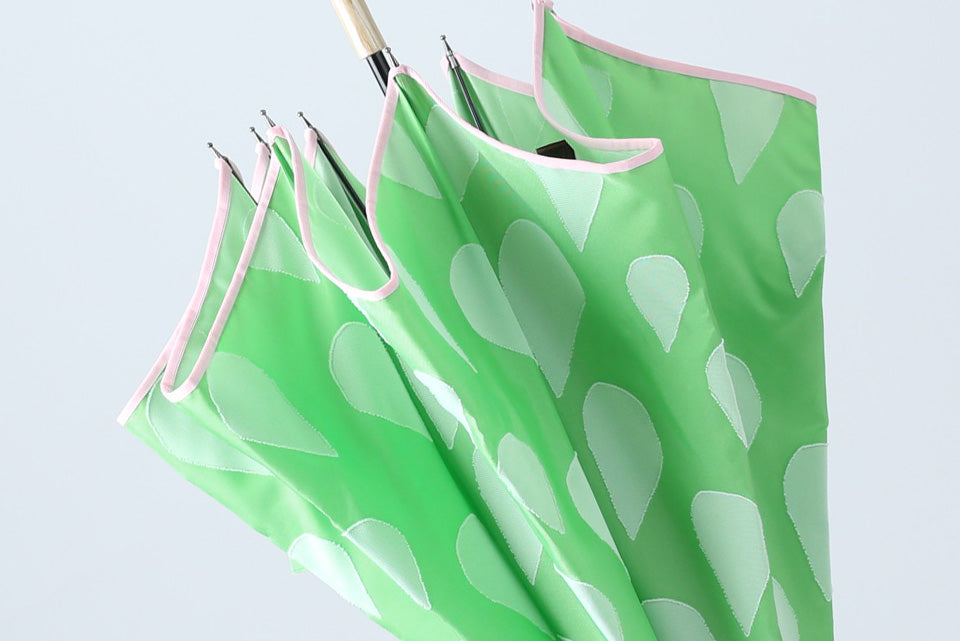
I was involved in creating the data for a collaborative umbrella with Swedish designer Stig Lindberg. How could I express his unique worldview in textiles? Because the appearance of colors changes depending on the texture, we had to think carefully about every aspect of the weaving process. The experience of turning a master designer's design into an umbrella was extremely stimulating.


Q. Have you made any improvements to the way you work?
Now that I'm raising a child, I also work from home.
Depending on my child's condition, I have asked my company to adjust my working hours so that I can switch to remote work and work remotely using special software. My commute takes an hour, so I want to be more involved in textile design, which I love, so I plan to trial online work once a week from now on. It will be a hassle for my senior colleagues to turn on my computer, but I am happy that I can use my commute time to work, as it will allow me to concentrate more on weaving.
I love making things, so my work is like a hobby to me (laughs). I'm also grateful for the environment that allows me to work in such a flexible way.


Q. Is there anything you would like to work on in the future?
I would like to improve Makita Shoten's ability to propose textiles, and also focus on proposals that make the most of the characteristics of the materials.
I usually think about what kind of pattern I want to create for my next collection and make notes of my ideas, but depending on the choice of thread and the structure of the weave, new expressions that have never been seen before can be created, so I would like to convey the fun of textiles to as many people as possible, while valuing the balance between technique and sensibility.


Other articles
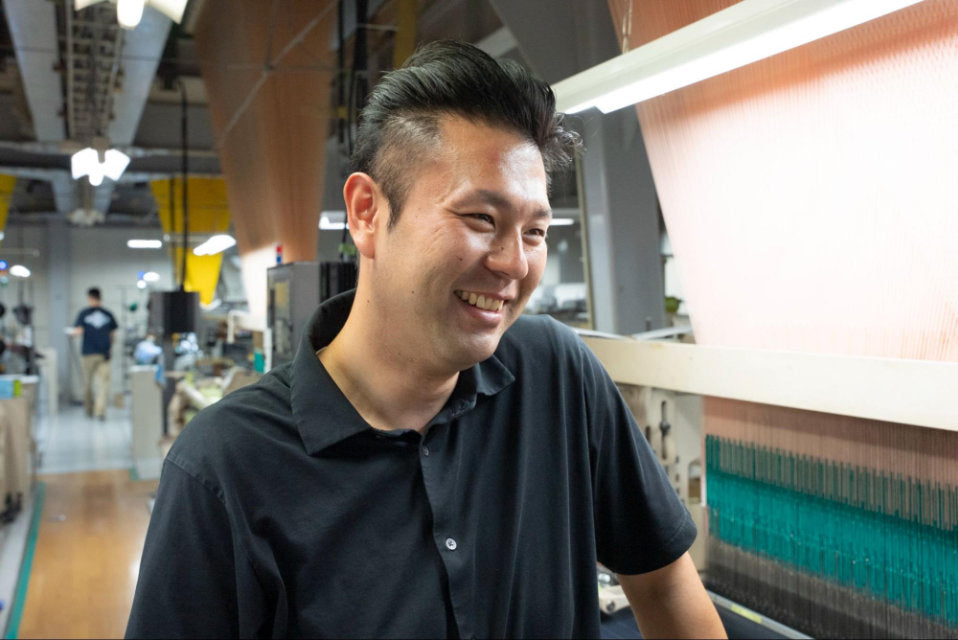
Fujie: Connecting the vision of textile artisans and brands to create something
>Read the article
The charm and fun of weaving learned through umbrella making: Rika Takiguchi
>Read the article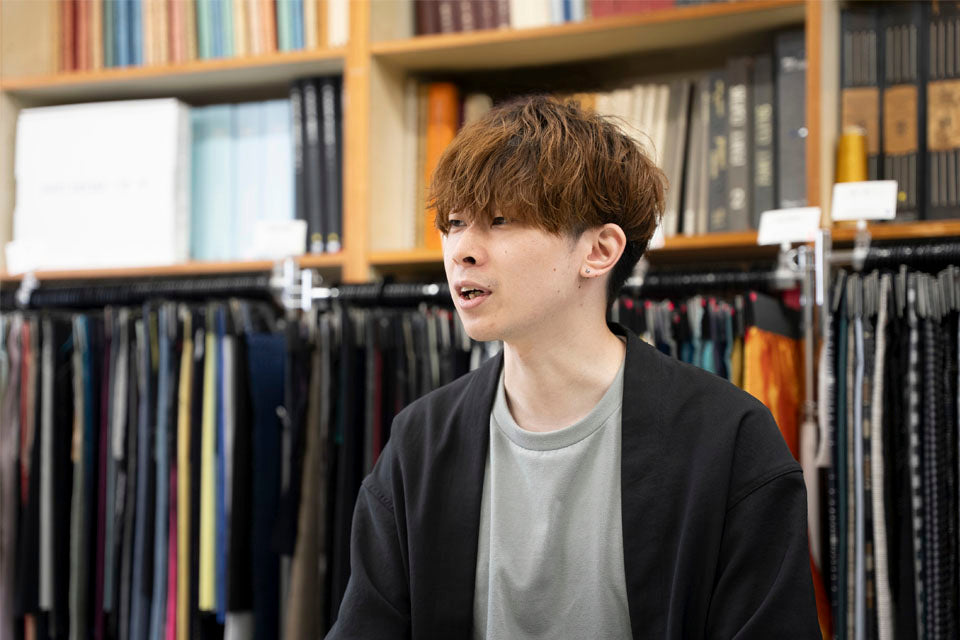
The bridge between craftsmen and customers: Tomoki Kurihara
>Read the article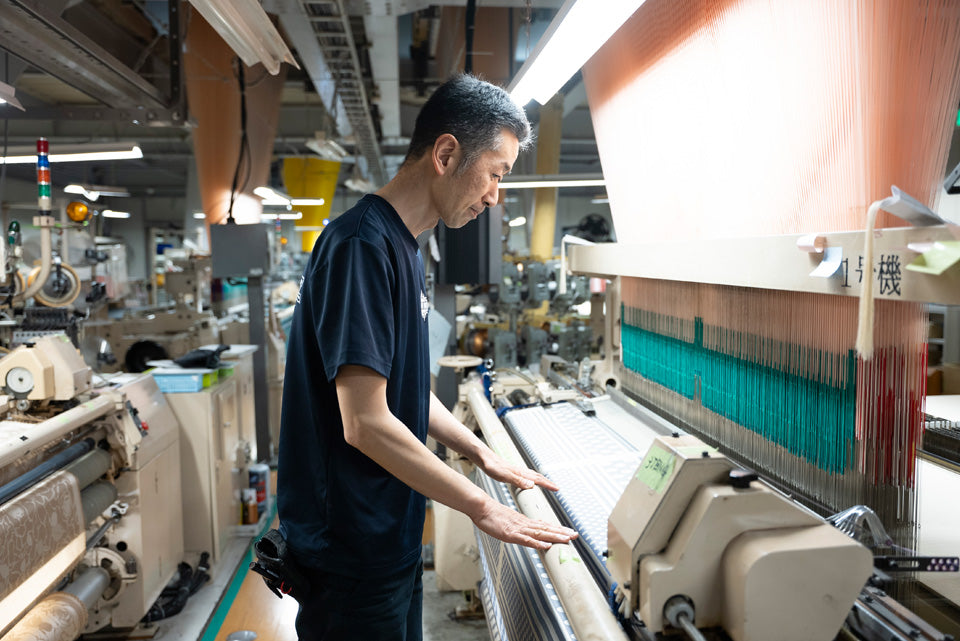
Daily conversations with the loom: Tatsuya Omata
>Read the article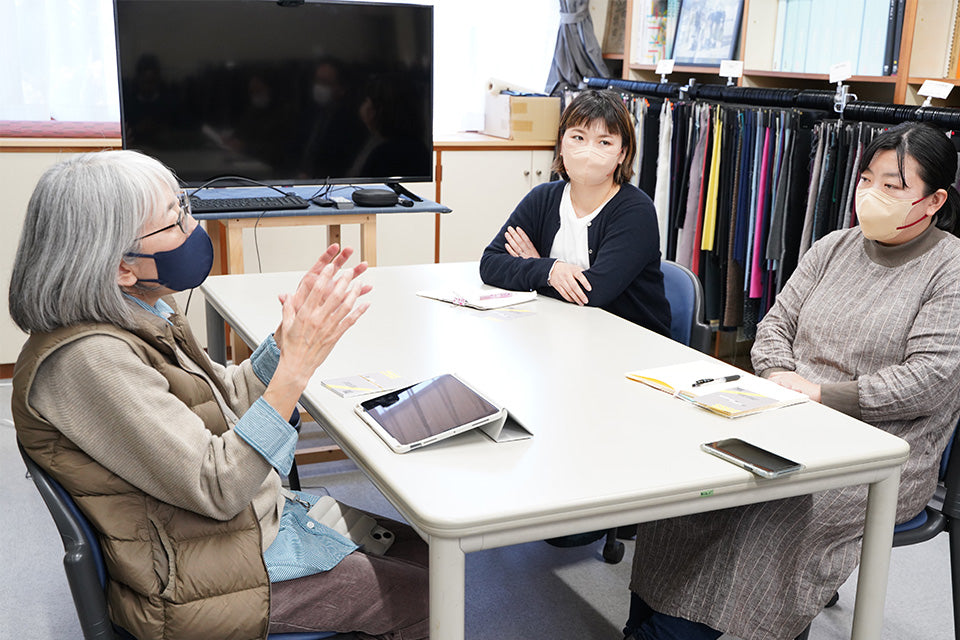
Makita Shoten's textiles evolve into a new era
>Read the article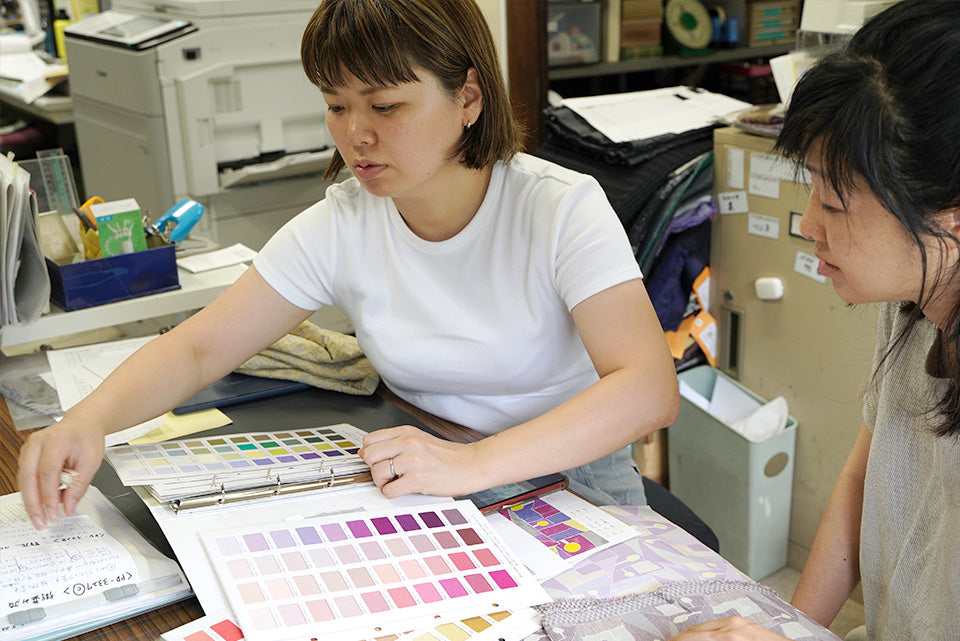
What are Makita Shoten's textile designers?
>Read the article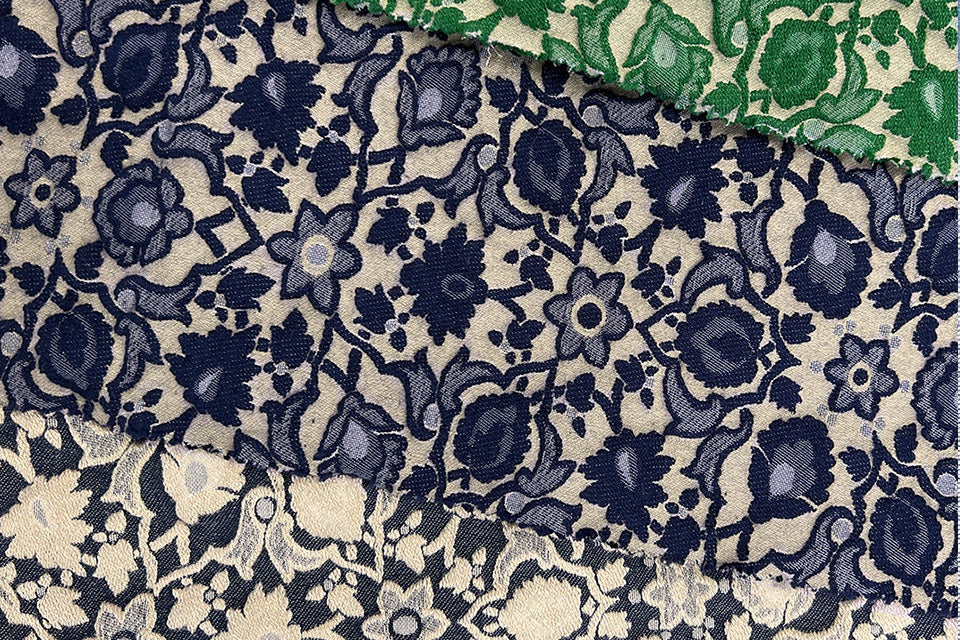
<Ordering original fabric>
[For corporate customers only] Would you like to create your own original jacquard fabric? We have a textile designer with specialized knowledge who will support you, so even if you are new to fabric making, you can place an order.
<Ordering an original umbrella>
[For corporate customers only] Would you like to create your own original umbrella? Makita Shoten is the only factory in Japan with an integrated production line from fabric to finished product.
<Weaving umbrella fabric and clothing fabric>
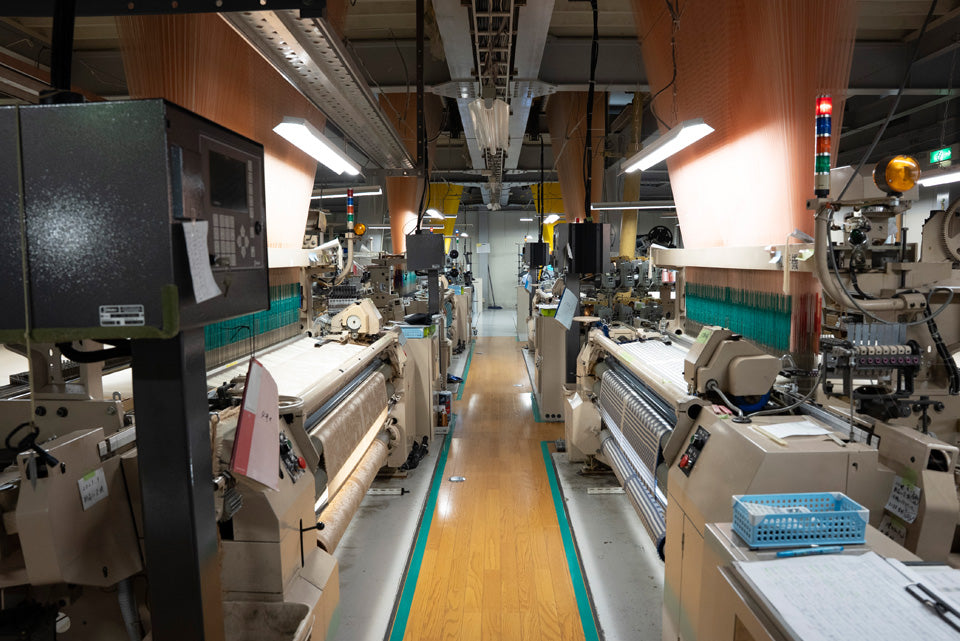
There are six main steps that Makida Shoten goes through before their fabrics are finished, and each step is carried out by specialized craftsmen who have inherited the traditions of the ancient production area.